Bucharest; Life under Ceaușescu.
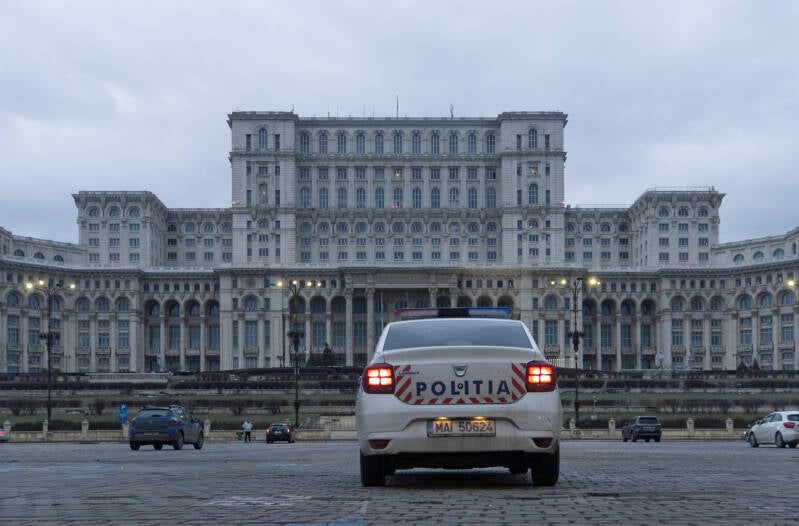
Photo above; The Palace of the Parliament.
From Paris of the East to Pyongyang of the West:
How the Rule of Nicolae and Elena Ceaușescu Affected Bucharest's Urban Environment.
Photos & text by Jean de Sousa.
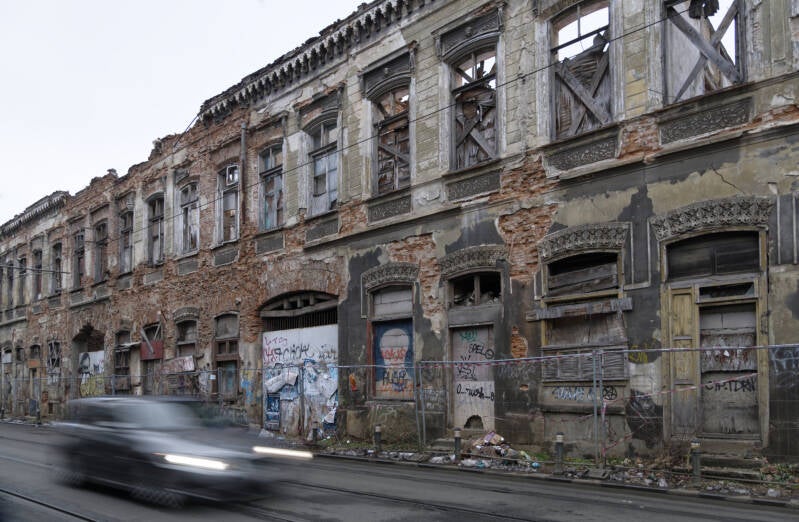
Photo above; Bucharest still bears some scars from the earthquake of 1977.
Nicolae Ceaușescu was a sinister oddity among the closed circle of Eastern Bloc leaders. None, except him, became so uniquely associated with the city from which they ruled. If all Socialist capital cities underwent tremendous changes in the post-war years, by the mid-1960s most of these impressive urban developments were concentrated on the outskirts and rarely disrupted the inner cities’ pre-existing layout. They consisted mostly of large microregions built to alleviate the chronic housing shortage and public buildings or infrastructures such as we could find in remarkable similarities on the other side of the Iron Curtain. Hence, despite the highly centralized nature of post-Stalinist Eastern Bloc regimes, Socialist capital cities were not the personal projects of a single individual and their spouse. One capital, however, defied this norm: Bucharest. Nicolae Ceaușescu himself candidly exposed his intentions during a party meeting on the 30th of March 1977, when he uttered these eerily prophetic words: “How beautiful would it be to demolish Bucharest.”¹ The timing of his statement was not coincidental. Barely three weeks earlier, a dramatic earthquake measuring around 7.2 on the Richter scale had wreaked havoc in eastern Romania and Soviet Moldova, causing severe damages across a large area. Bucharest was badly hit. As many as 1.391 inhabitants lost their lives in the catastrophe and thirty three buildings collapsed entirely (countless more were severely damaged). Nevertheless, although costly in human lives, the earthquake did not dramatically affect Bucharest’s overall layout and architecture. The Romanian capital was spared the utter devastation that befell other urban victims of earthquakes like Skopje and Tashkent the previous decade.²
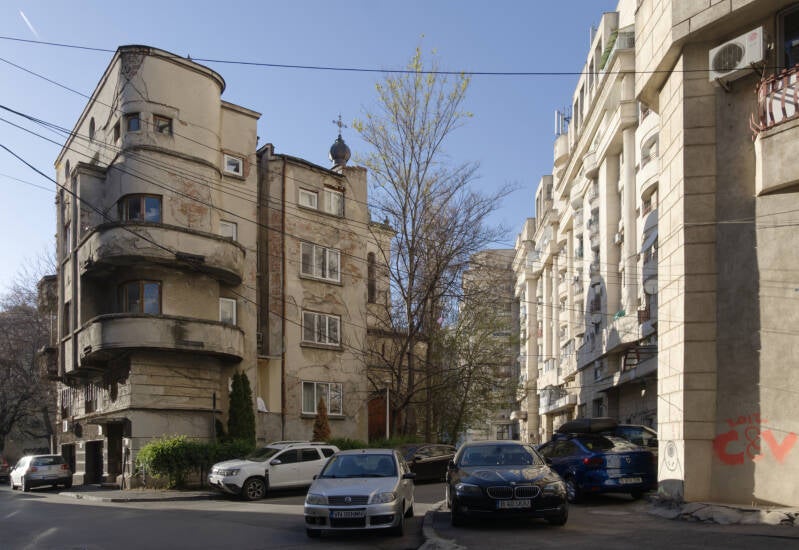
Photo above; A section of the “Boulevard of the Victory of Socialism” slicing through the old town.
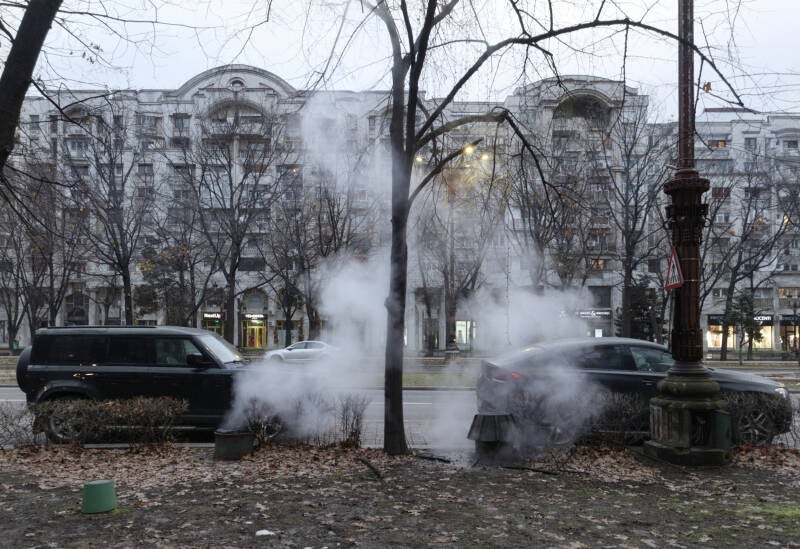
Photo above; Bulevardul Unirii, formerly known as Boulevard of the Victory of Socialism.
Before the disaster of 1977, Nicolae Ceausescu's urban interventions in his capital were relatively limited in scope and not necessarily out of touch with international urban precepts popular at the time. Even Gheorghe Gheorghiu-Dej, the Conductor's arch Stalinist predecessor, had the decency to protect Bucharest from the vulgarity of Socialist Realism and enacted effective urban policies favouring the development of massive residential districts on largely unoccupied lands. If not for the tacky Casa Scânteii, one may easily forget that Bucharest was at some point the capital of a Stalinist regime. When Ceaușescu assumed party leadership in 1965, he initially formulated an urban policy in continuity with the one already practiced by his predecessor.³ Within the first years of his tenure, he simplified the administrative divisions of Bucharest, limited internal migration to the capital and accelerated the development of modern housing districts. Large radial boulevards lined with prefabricated residential buildings were opened up to provide monumental entryways into the city.⁴ But Nicolae Ceaușescu’s fairly modest debut in urban planning took a dramatic turn when the Conductor's growing self-confidence turned into sheer megalomania. This shift began in 1968, bolstered by his newfound popularity from opposing the Warsaw Pact’s invasion of Czechoslovakia, and was profoundly influenced by his visits to North Korea in the early 1970s which provided ample (if dubious) inspiration for the reconstruction of Bucharest.⁵ The earthquake of 1977 served as a final catalyst for the comprehensive restructuring of Bucharest. Despite the fact that much of the city centre survived the disaster with moderate damage, Ceaușescu seized the opportunity to pursue the complete transformation of the area into his grand vision: the “Centrul Civic.”
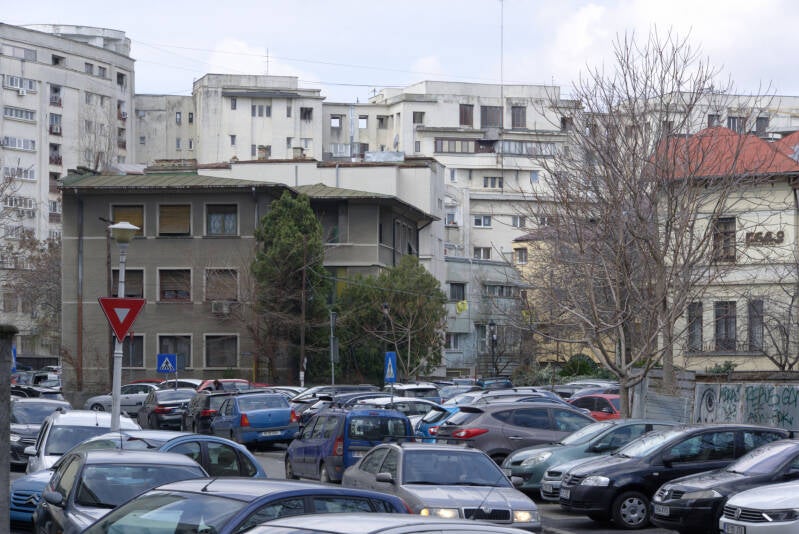
Photo above; A section of the old town isolated and surrounded by the Central Civic.
Despite the name, this centre was aggressively “un-civic” for its construction required untold destruction in exchange for very little actual benefits for the population of Bucharest. At this stage, Nicolae Ceaușescu showed little regard for the welfare of Bucharest’s inhabitants.⁶ The construction of the Central Civic was pursued with a level of sheer brutality that echoed the harshness of earlier Stalinist urban redevelopment practices, rather than aligning with the more tempered approaches of 1980s Eastern Bloc. The project consists of a large boulevard, originally titled “Boulevard of the Victory of Socialism”, slicing unceremoniously through the historic centre (and destroying its urban fabric in the process) all the way to the central piece of the Central Civic: the Casa Poporului (People’s House). A lot has been written about the Casa Poporului, known today as the Palace of the Parliament, mostly superlatives. It is the second largest building in the world, and was supposed to host the Ceaușescu's after completion. Although designed by an extensive team of architects, Nicolae Ceaușescu was nonetheless heavily involved in the design and the construction of the palace. This shows, for his utter lack of taste evidently displayed in the decoration of his personal house can be recognized in the repelling appearance of the Casa Poporului.⁷ It is ridiculously oversized, but badly proportioned so the overall effect is more one of awkwardness. It is supposedly traditional in appearance, but in reality so aggressively kitsch that the Stalinist Casa Scânteii looks like a model of platonic restraint à la Mies Van Der Rohe in comparison.
The Casa Poporului is the architectural personification of Nicolae Ceaușescu’s absurdity, but it is not the only building that comprises the Centrul Civic. Elena Ceaușescu received her own “Palace of Science” nearby and several administrative buildings were also constructed. The human cost of the Centrul Civic was appalling. Not only was the construction undertaken at a time of great financial distress, but it caused the forced relocation of 40.000 inhabitants to wholly inadequate dwellings situated on the outskirts of Bucharest. Some were notified as little as twenty four hours before the demolition of their homes. An unspecified number of recalcitrant's preferred to commit suicide rather than complying.⁸ In the end, half of the city centre (an area equivalent to the city of Venice) was demolished to make way for the Centrul Civic. It epitomizes the shallow, but not benign, neo-Stalinism practiced by Nicolae Ceaușescu, down to the pseudo-traditional architectural style reminiscent of Socialist Realism. Ironically, the Conductor and his wife never attended the opening ceremony of their own palace. In 1989, the Casa Poporului was only 70% completed and much of the Centrul Civic was still a work in progress, therefore the completion of the project was actually entrusted to the post-Revolution democratic government.⁹ In a supremely ironic twist of fate, the dense urban area demolished to make way for the Palace’s western garden was recently used to erect the largest Orthodox church in the world, as if the suffering inflicted on former’s residents was poised to once again satisfy a vain passion for grandiloquent “prestige projects”, but this time in a democratic, European Romania.
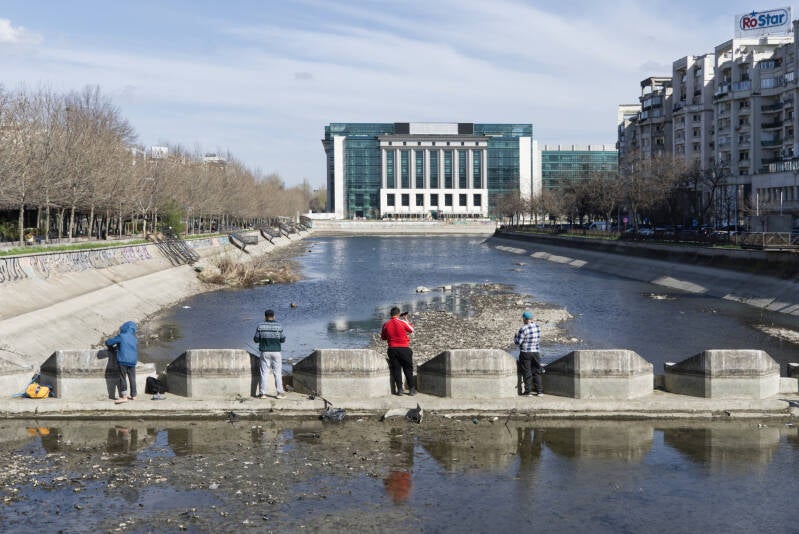
Photo above; Nicolae Ceaușescu ordered the construction of a concrete riverbed for the Dâmbovița river.
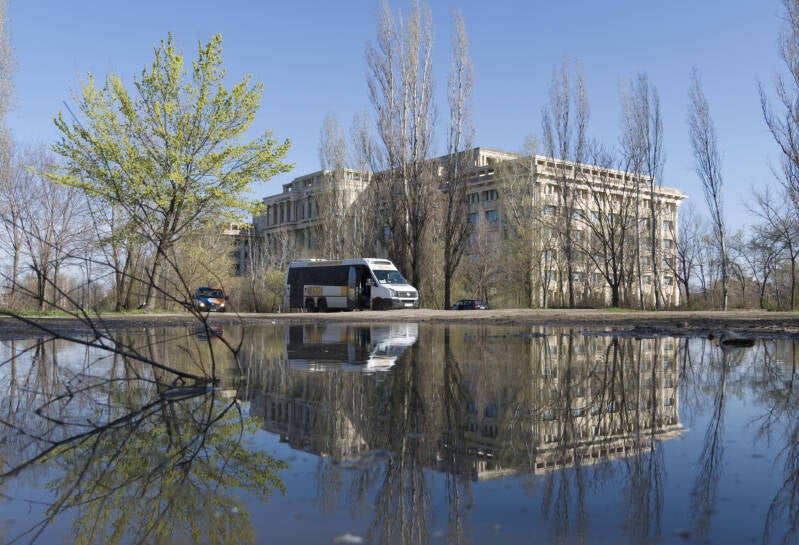
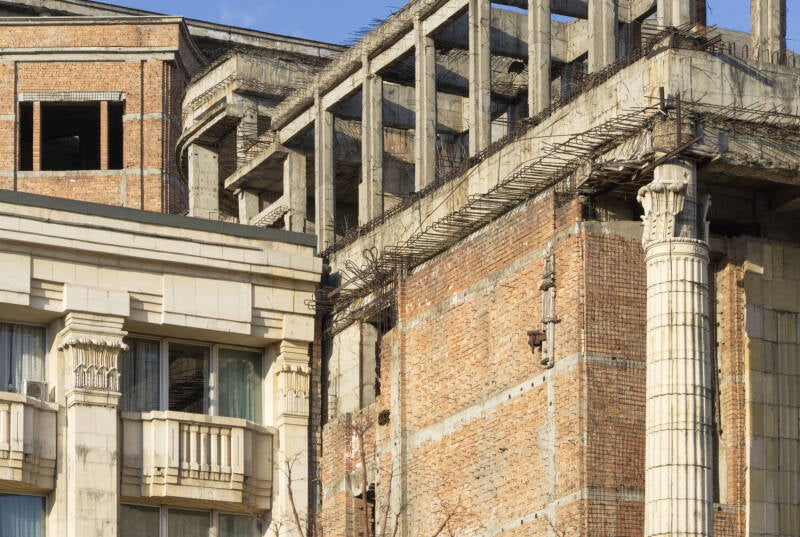
Photos above; Elena Ceaușescu’s personal project, the Palace of Science, was never fully completed. It now houses the Romanian Academy.

Photo above; The “largest Orthodox church in the world” as seen in 2022. The construction was completed in 2025.
If Nicolae Ceaușescu’s legacy continues to divide opinion in contemporary Romania, his unlikable wife Elena Ceaușescu on the other hand managed to unite the Romanians and become the target of universal hatred. Few would argue that she did not deserve it. Elena Ceaușescu’s incredible obnoxiousness and ridiculously exaggerated intellectual pretences, aggravated by the fact that she owed her position and titles solely thanks to her husband’s achievements, made her so despised, that no amount of nostalgia could help in initiating even a small reappraisal of her memory in today’s Romania. Surprisingly, accurate historical sources describing Elena Ceaușescu’s genuine personality are rare, since the few people who have known the First Lady personally and dared to publish accounts of her behaviour in private can hardly be considered fully impartial sources. Nevertheless, it is universally accepted today that Elena Ceaușescu was, indeed, really vain and totally oblivious, not to say outwardly hostile, to the life of commoners. Her meddling in Bucharest’s urban policy tends to confirm it. The reconstruction of Bucharest was her husband’s project, but this did not prevent her from carrying absurd interventions on her own. I will focus on her anecdotal, yet revealing role, in shaping Bucharest’s metro network.
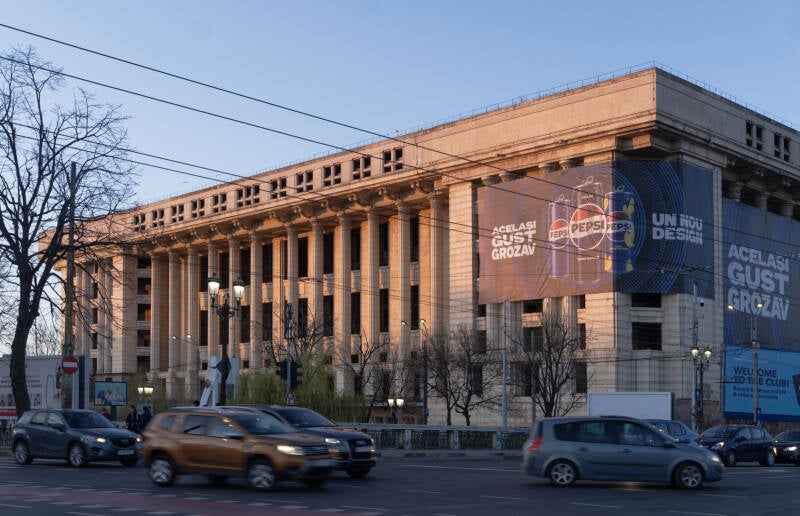
Photo above; It should have been the mausoleum for Nicolae Ceaușescu and Elena Ceaușescu and a museum glorifying the regime. Instead, the grandiloquent building was never completed and today stands as a reminder of the forsaken dictatorship.
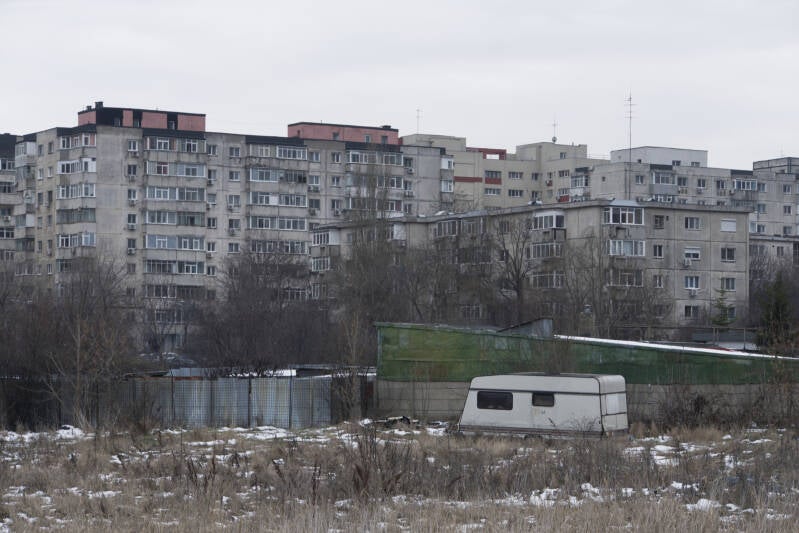
Photo above; Berceni - one of Bucharest’s largest residential districts. The construction started under Gheorghe Gheorghiu-Dej but took a more ambitious turn under the rule of Nicolae Ceaușescu.

Photo above; Originally an underdeveloped area of Bucharest, Văcărești caught the attention of the Conducător in the 1980s. Toward the end of the decade, he ordered the district to be turned into a massive lake intended to help meet the city’s water needs in case of crisis. However, the project was never completed as planned due to engineering mistakes, and the basin was never filled as intended. Instead of a lake, the area is now the Văcărești Natural Park.
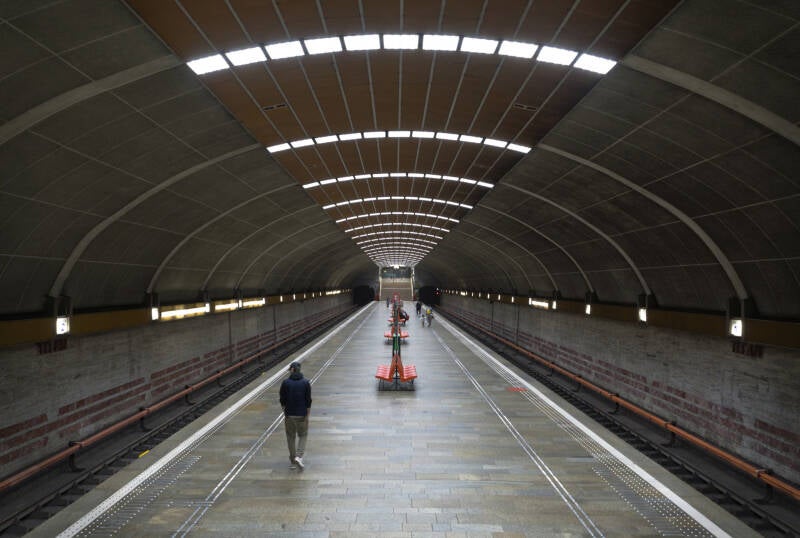
Photo above; Titan Metro Station. Completed in 1981, it is arguably one of Bucharest’s most outstanding examples of modernist architecture.
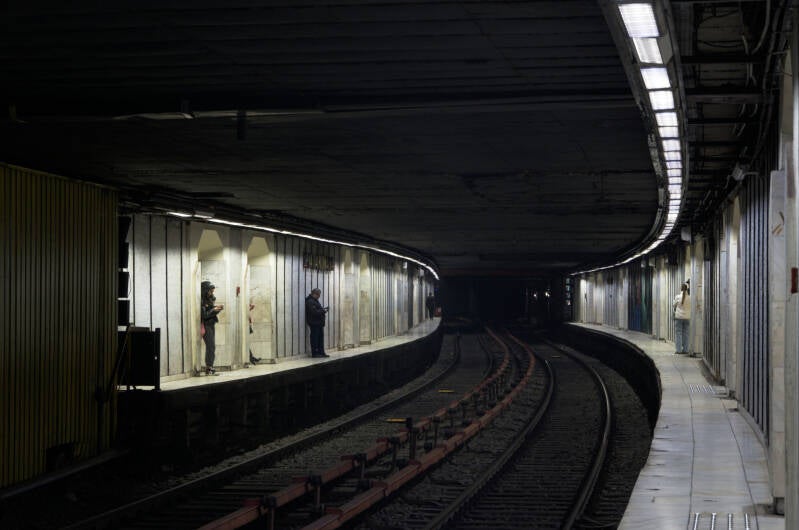
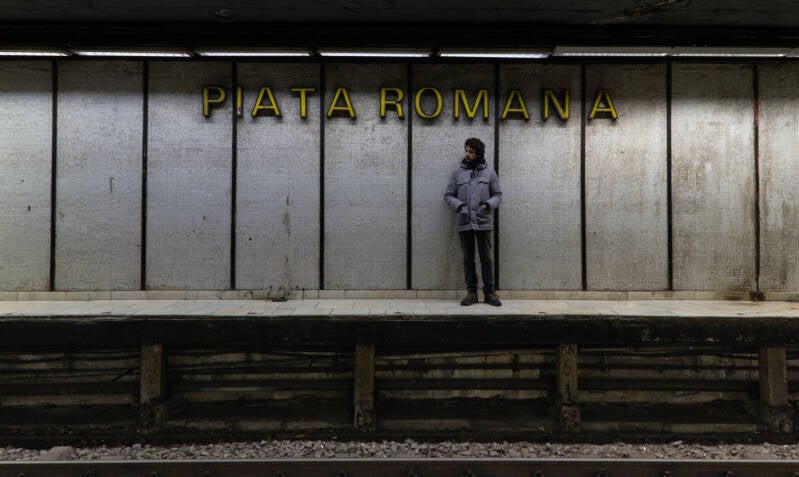
Photos above; Piața Romană metro station. The physical manifestation of Elena’s insanity.
Bucharest metro network is undoubtedly the greatest architectural achievement of the Ceaușescu-era in the Romanian capital. An unlikely showcase of tasteful modernism that successfully avoided the pitfalls of over uniformization, designed by talented architects (among them many women), it was nonetheless an effective political tool in which the Ceaușescu's took great interest. The network was put in service in the late 1970s, and regularly extended afterward. According to an unsubstantiated but telling urban legend, it is Elena Ceaușescu herself who personally forbade the construction of a line linking the heavily populated microregion of Drumul Taberei with the rest of the city on account of the inhabitants’ “bourgeois” character (the much-needed line was eventually inaugurated after years of delay in 2020). This is likely untrue, in fact the culprit was presumably her husband himself. However, it was in 1985 during the planning of the line number two linking the district of Berceni with Pipera via the city centre that Elena Ceaușescu was to make her most nonsensical (documented) interference. An intervention so absurd, so disconnected from the reality of a world she could not comprehend, that it resulted in the creation of a bewildering architectural oddity that still defies reason up to this day. The following event was recalled years later by the then engineer in chief of metro construction, Octavian Udriște and is backed by metro designer Sorin Călinescu.¹⁰
According to Udriște, a discussion took place at the Central Committee building in 1985 during which General Petre Constantinescu, head of Bucharest Metro company, presented to the dictators a map showing the second line in construction. Nicolae was apparently satisfied with the result, but Elena was not. She angrily pointed her finger at the dot representing “Piața Romană”, a station that was to be built alongside the busy square of the same name, and allegedly asked Constantinescu if there were any industrial facilities in the vicinity. Constantinescu informed Elena that there were none nearby, instead the Academy of Economic Studies was located on the square. Elena furiously retorted: “Students are too fat, they will walk! Don’t build this station.” Taken aback by this surprising remark, Constantinescu could do nothing else than accept the decision, at least officially. The engineers in charge of the construction knew all too well that Piața Romană could not be omitted from the network, since without this stop, the walking distance between the two nearest stations would reach more than two kilometres. But they were also aware of the futility of arguing with Elena Ceausescu. Nicolae silently backed his wife. Consequently, Piața Romană was officially removed from the construction plan. “Officially”, only, because in practice, the engineers were so strongly convinced of the necessity to build this station, that they decided to drill it in secret behind the leaders’ back.
Bucharest metro’s second line was opened to passengers in 1986, and probably to Elena’s great delight, the very few Romanians who somehow managed to become fat in spite of the food scarcity were deprived of the comfort of commuting through Piața Romană since the station did not exist yet. Still, public pressure rapidly mounted and Nicolae Ceaușescu was repeatedly asked to allow for the construction of Piața Romană. He eventually relented and gave his consent, however years of unofficial construction meant that the station’s layout could not be properly designed. Access galleries had been drilled in secret behind the tunnel’s walls, but it was found impossible to add proper platforms. As a clunky alternative, the engineers carved narrow holes into the wall (Nicolae Ceaușescu is reported to have initially approved the opening of just a single small hole per side) and improvised a makeshift “platform” barely wide enough to accommodate a few brave passengers, so long as they don’t lean forward lest they want to run the risk of being beheaded by passing trains. In late 1988, the dangerously designed station Piața Romană was thus officially put in service. From now on, Romanian students did not have to walk more, but by a sinister twist of fate, Elena Ceaușescu’s absurd whim succeeded in making the station dangerously narrow for well-fed Romanians.
The case of Piața Romană may have been the most extreme display of Elena’s ill-considered interventions in metro construction, but it was by no means the only one. Octavian Udriște also recalled how one day, he had to justify to the First Lady why the stations Universitate and Piața Unirii were “only” one kilometre apart. His explanations supposedly improvised on the spot were apparently enough to convince her and, thankfully, these centrally-located stations did not have to be reconstructed farther away from each other in order to satisfy Elena’s grotesque caprices.
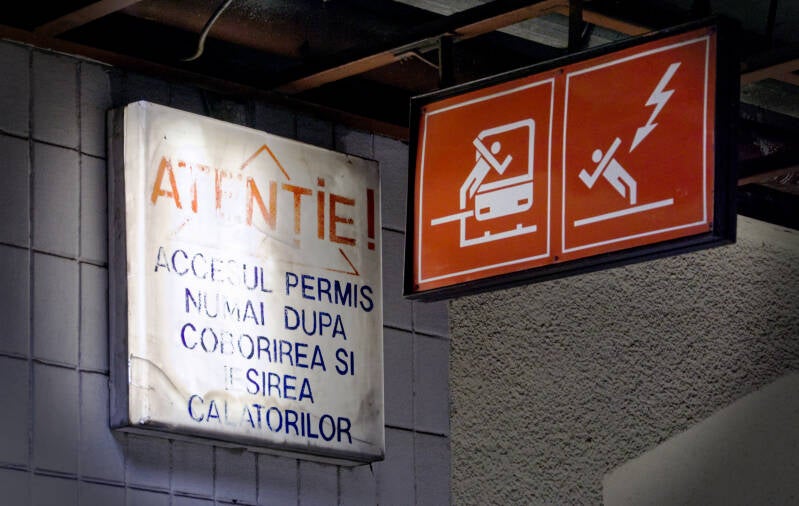
Photo above; A sign at Piața Romană metro station informing passengers that access to the platform is only permitted when entering or exiting the train. In practice, the warning is widely ignored.
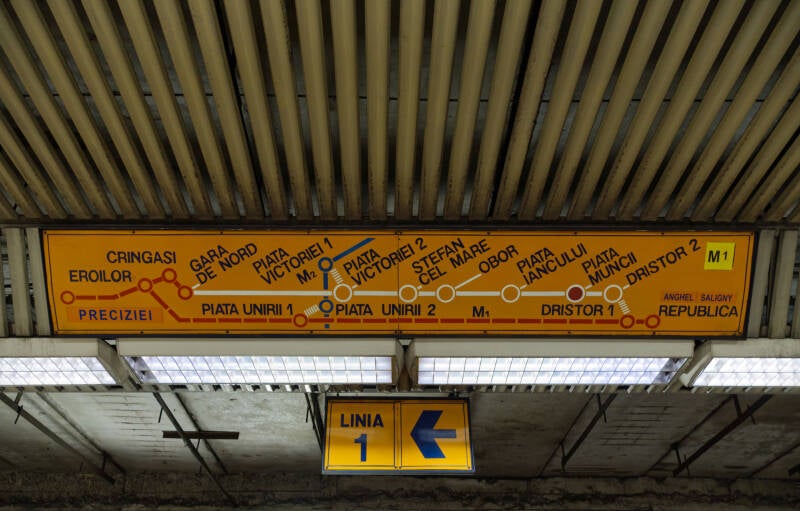
Photo above; A very non-user-friendly sign from 1989, photographed in 2024 at Piața Muncii metro station. It is highly abstract and intentionally difficult to read. The regime’s paranoia extended to the metro system, where maps and network diagrams were not fully accurate so as not to reveal too much information.
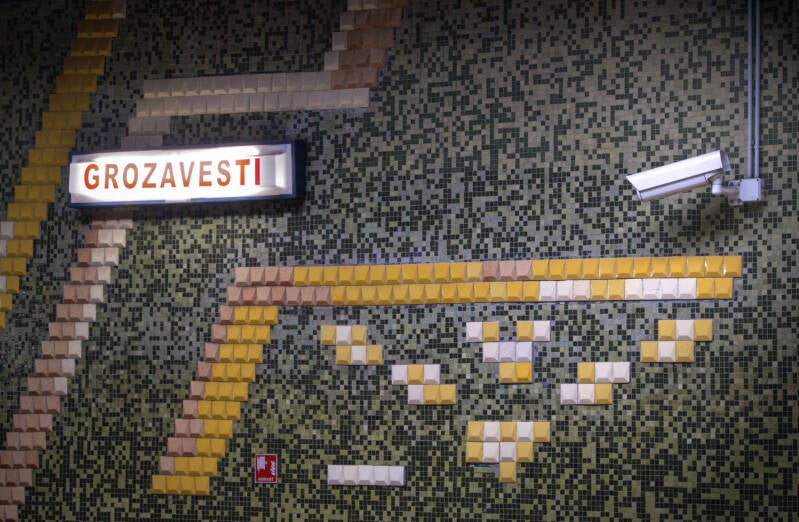
Photo above; The regime of Nicolae Ceaușescu and its odious methods have perished, but the desire to observe and monitor persists in contemporary Bucharest.
Sources:
¹ Bogdan Andrei Fezi (2013) De la systématisation de Bucarest à la destruction des villages roumains, In Situ
² ibid
³ Darrick Danta (1993) Ceausescu’s Bucharest, Geographical Review, pp 171
⁴ ibid
⁵ Ger Duijzings (2011) Dictators, dogs, and survival in a post-totalitarian city, Urban Constellations unpaginated
⁶ Duncan Light and Craig Young Urban space, political identity and the unwanted legacies of state socialism: Bucharest’s problematic Centru Civic in the post-socialist era, Manchester Metropolitan University pp 10
⁷ Maria De Betania Uchoa Cavalcanti (1997) Urban reconstruction and autocratic regimes: Ceausescu’s Bucharest in its historic context, Planning Perspectives, pp 87-88
⁸ Darrick Danta (1993) Ceausescu’s Bucharest, Geographical Review, pp 175
⁹ Duncan Light and Craig Young Urban space, political identity and the unwanted legacies of state socialism: Bucharest’s problematic Centru Civic in the post-socialist era, Manchester Metropolitan University pp 12
¹⁰ Interviews with Octavian Udriște can be found online at the following addresses:
Thanks for reading and viewing this informative piece of journalism. Please like and share to show your support.