Working but Homeless in Britain.
Documentary photos & text by Sam Singleton.
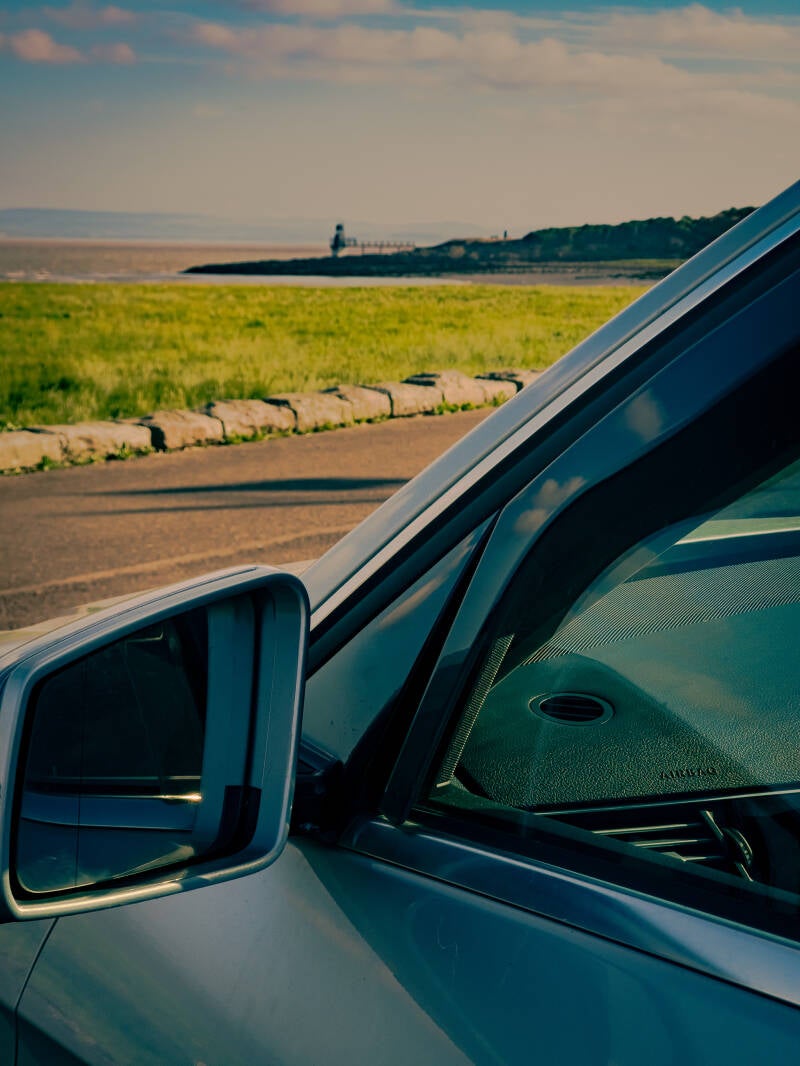
- A Room with a View.
12 July 2026 | Bristol / North Somerset
Car beside the coast during the first days of No Fixed Address. I spent a lot of time looking for places where I could park without being disturbed, and in the heat also thinking about shade and whether the car would cool down. The view could feel like freedom for a moment, but I was still waking on the back seat.
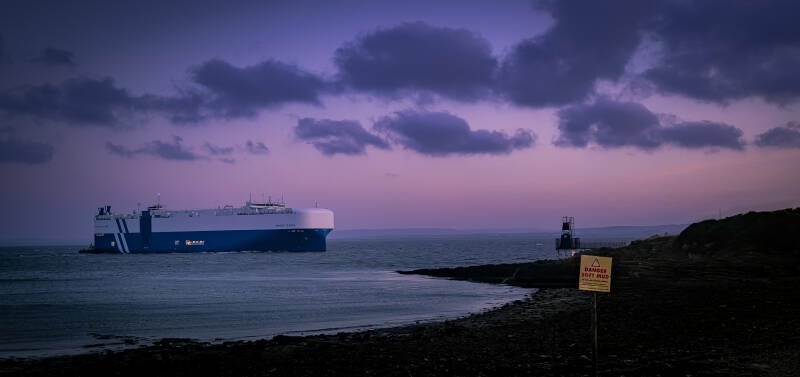
Soft Mud.
13 July 2026 | North Somerset
A ship passes the coast at dawn during the first days I was sleeping in the car. Photographs like this became part of the contradiction at the centre of the project: the surroundings could look peaceful or even beautiful while the practical question of where I would sleep, wash and get ready for work remained unresolved.
No Fixed Address.
Most mornings, what was happening outside work became almost invisible the moment I walked through the door. I could do an ordinary shift, speak to people as normal and then leave knowing I still had to work out where I was sleeping that night.
For 23 nights during summer 2026 I had no secure home to return to. I was working full time as a mechanic near Bristol, I had a car, I had photography equipment, and from the outside much of my life could still look normal. I could put on work clothes, drive to work, do a shift and speak to people who had no reason to know that the place I would sleep that night might be the back seat of the same car.
The first five nights were spent in the car. Everything had to change function depending on the time of day. The back seat became a bed at night and had to become a car again in the morning. The boot and footwells held clothes, camera equipment, food, water and whatever else I had managed to keep with me. Finding somewhere to park was not just about finding a space. I was thinking about whether I would be disturbed, whether the car would be obvious, whether it would cool down after a hot day, and where I could go in the morning to wash and get ready for work.
No Fixed Address grew out of that routine. I did not want to photograph homelessness as a series of dramatic moments because that was not how I was experiencing it. Most of it was boring, repetitive and logistical. I needed clean clothes. I needed water. I needed to eat. Things needed charging. I needed somewhere to wash. I needed to get enough sleep to work the next day. The ordinary things that disappear into the background when you have a home became separate jobs that had to be planned.
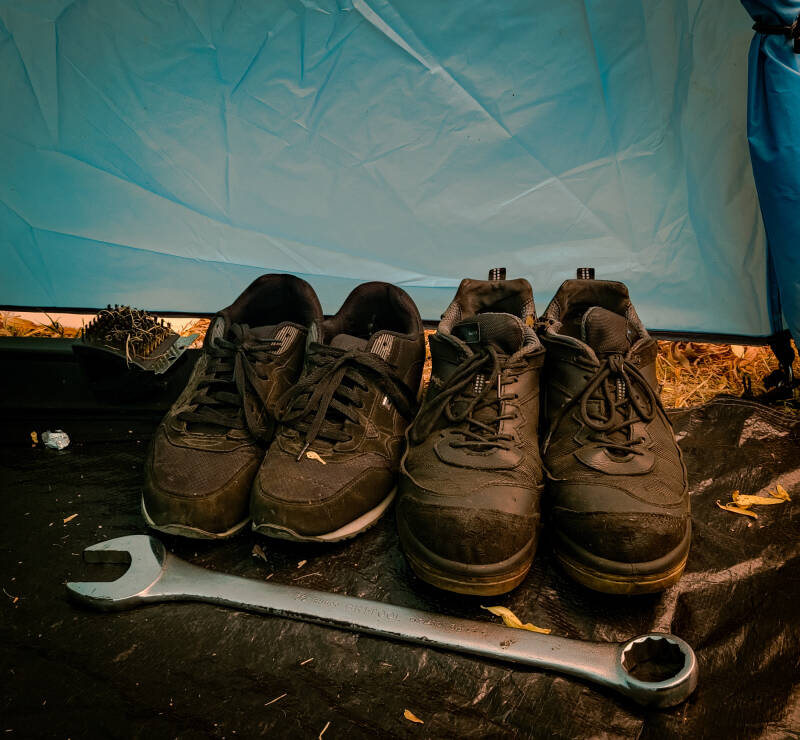
A self-service laundrette at Portbury services became part of keeping the working version of me intact. A small camping stove meant dinner could be made wherever I had stopped. Water had to be carried rather than assumed. After I recovered some camping equipment, a campsite gave me somewhere I was actually supposed to be for the night. The tent was safer and more comfortable than the car, but it did not suddenly turn the situation into a holiday. Work boots and tools sat beside bedding. The car remained transport, storage and a fall-back bedroom.
That contradiction became central to the photographs. There were moments that could look almost peaceful: the sea, a campsite, evening light, an empty stretch of coast. Some photographs could be mistaken for pictures of freedom if they were separated from the circumstances in which they were made. I was conscious of that while photographing. A beautiful view did not cancel out the fact that I still had to work out where I was sleeping. At the same time, I did not want every photograph to prove hardship by looking miserable. Both things were true at once.
Being both the photographer and the subject created another problem. There was nobody outside the situation deciding when the camera should come out. I had to decide what was worth recording, what was simply private, and when making a photograph would turn something real into a performance. There are photographs I did not make because the act of making them would have changed the moment too much. There are others where my presence is only visible through the systems around me: bedding in a car, a meal on a stove, work shoes inside a tent, bags arriving on a bed in a new room.
That absence of a conventional subject is part of the point. Hidden homelessness does not always announce itself. A parked car is just a parked car. A person in work clothes is just another person going to work. Someone can be mobile, employed and outwardly functioning while still having nowhere secure to return to.
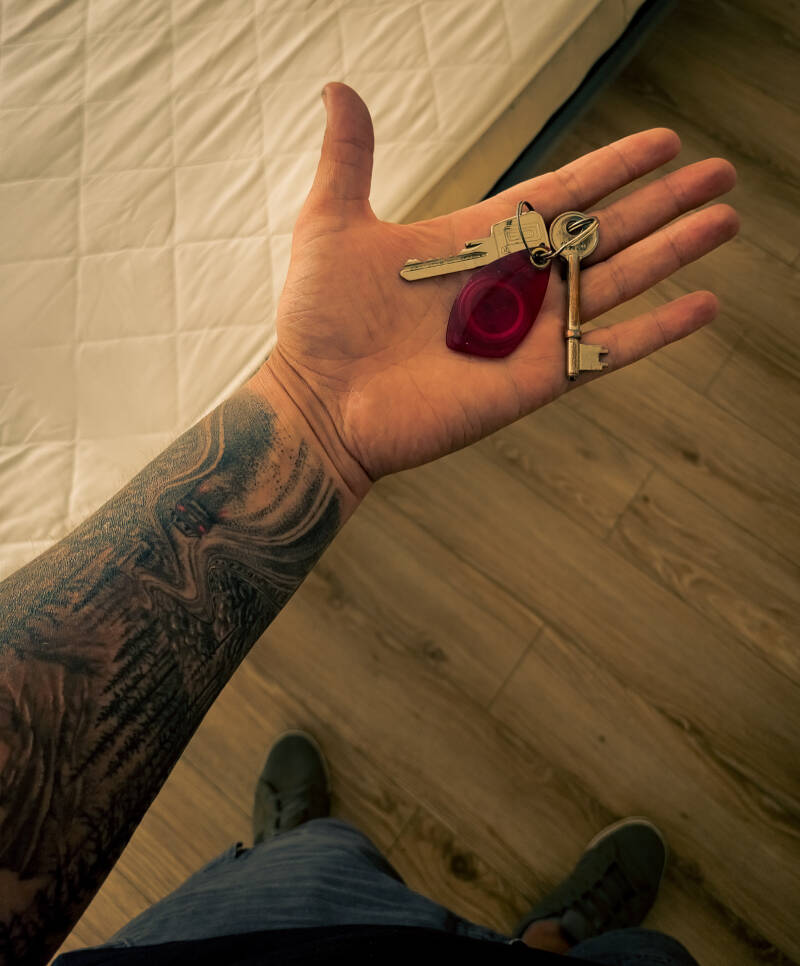
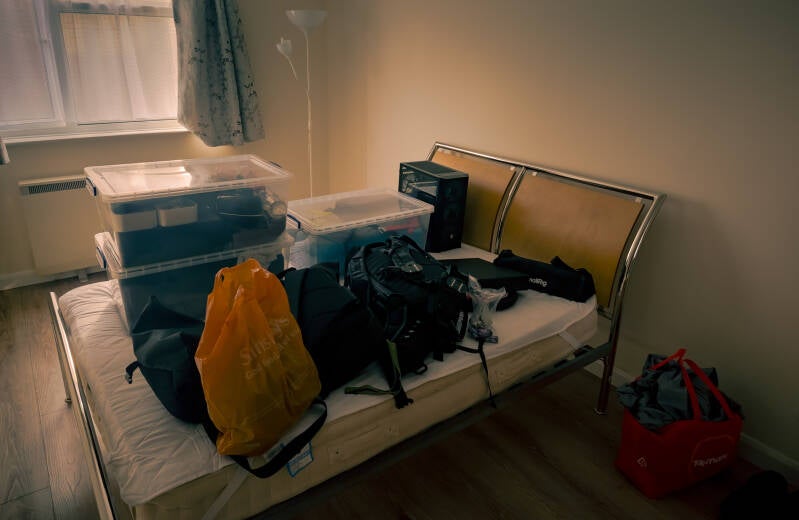
On 2 August 2026 I received the keys to a rented room. One of the obvious photographs is my hand holding those keys. But the quieter photographs made after moving in matter just as much to me: belongings piled on the bed, the strange amount of empty space around them, getting dressed for work in a mirror, camera equipment put down somewhere that could finally stay put.
Getting a room solved the immediate question of where I would sleep. It did not create a clean ending. For weeks my habits still belonged to the previous life. I noticed sockets because things could be charged without planning. I noticed running water. I noticed being able to leave something in one place and know it would still be there when I came back. The project therefore continues beyond the moment of being housed. I am interested in what happens after the visible crisis has ended and the body has not quite caught up.
No Fixed Address is not an attempt to describe homelessness as a whole. Twenty-three nights cannot stand in for years of rough sleeping, temporary accommodation, hostels, addiction, poverty or any of the other experiences that sit under the same word. I was fortunate in ways that mattered: I had employment, transport and eventually enough money to secure a room.
What I can document is the version I lived through. It was a form of homelessness that could sit behind an ordinary working day and remain largely unseen. The photographs are a record of the small practical systems that made that possible, and of the gap between how a life can look from the outside and what is actually happening inside it.
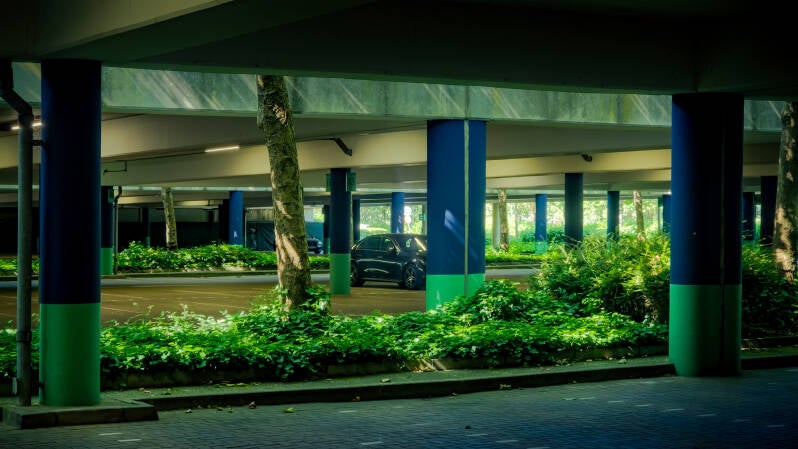
Parked for the Night.
12 July 2026 | Bristol / North Somerset
My car parked under cover during the first days of No Fixed Address. From outside it remained an ordinary parked car; the same vehicle was also carrying the belongings and sleeping arrangements I was relying on.
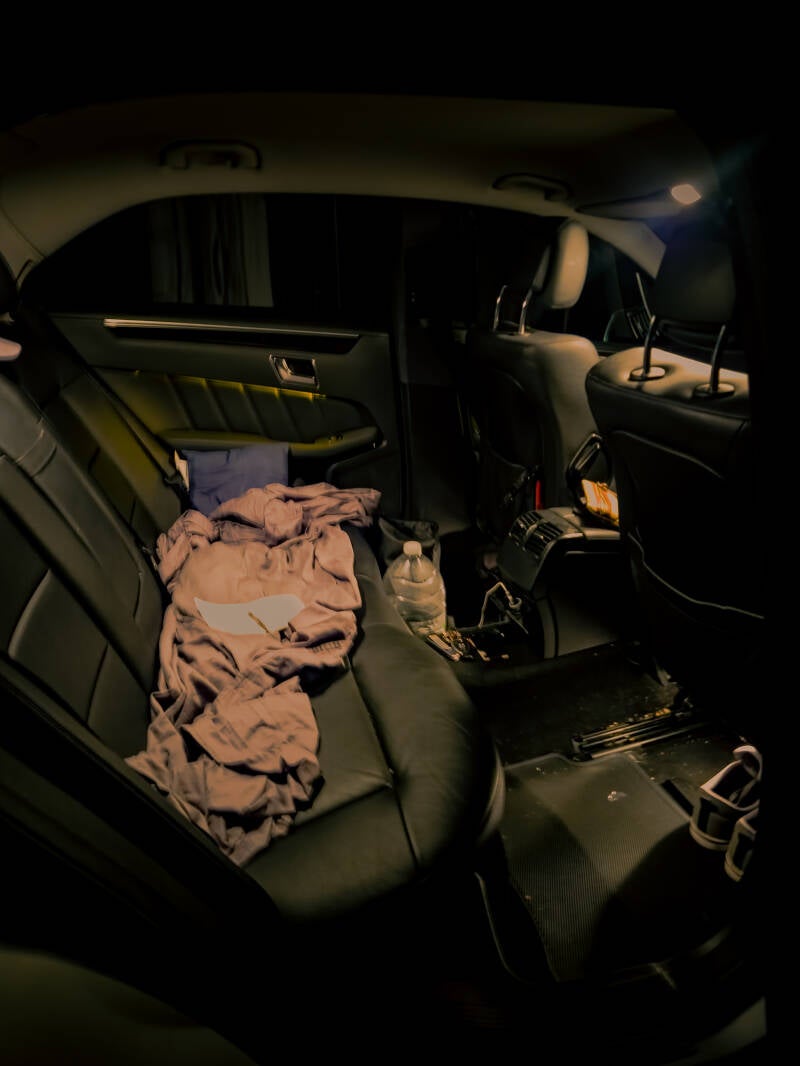
How to Hide a Bedroom.
July 2026 | Bristol / North Somerset
The back seat of my car made into a bed during the first five nights of No Fixed Address. By morning, the bedding had to be packed away so the bedroom could become a car again.
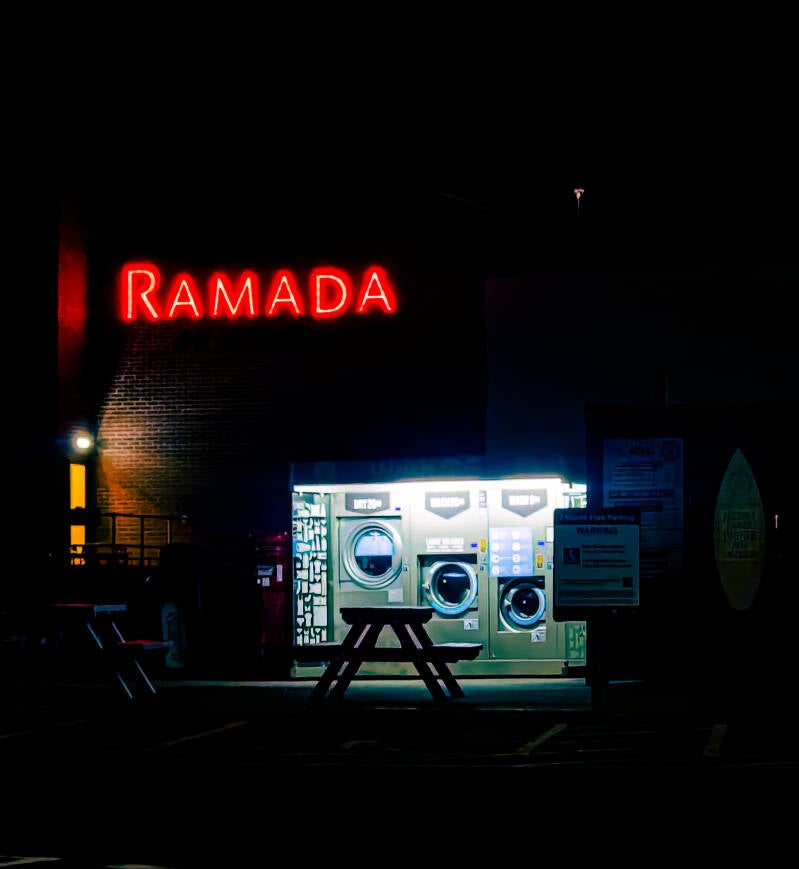
Ramada Laundrette.
July 2026 | Portbury Services, North Somerset
A self-service laundrette at Portbury Services, used late at night while I was sleeping in my car. Washing clothes became part of the routine of staying clean and presentable for work.
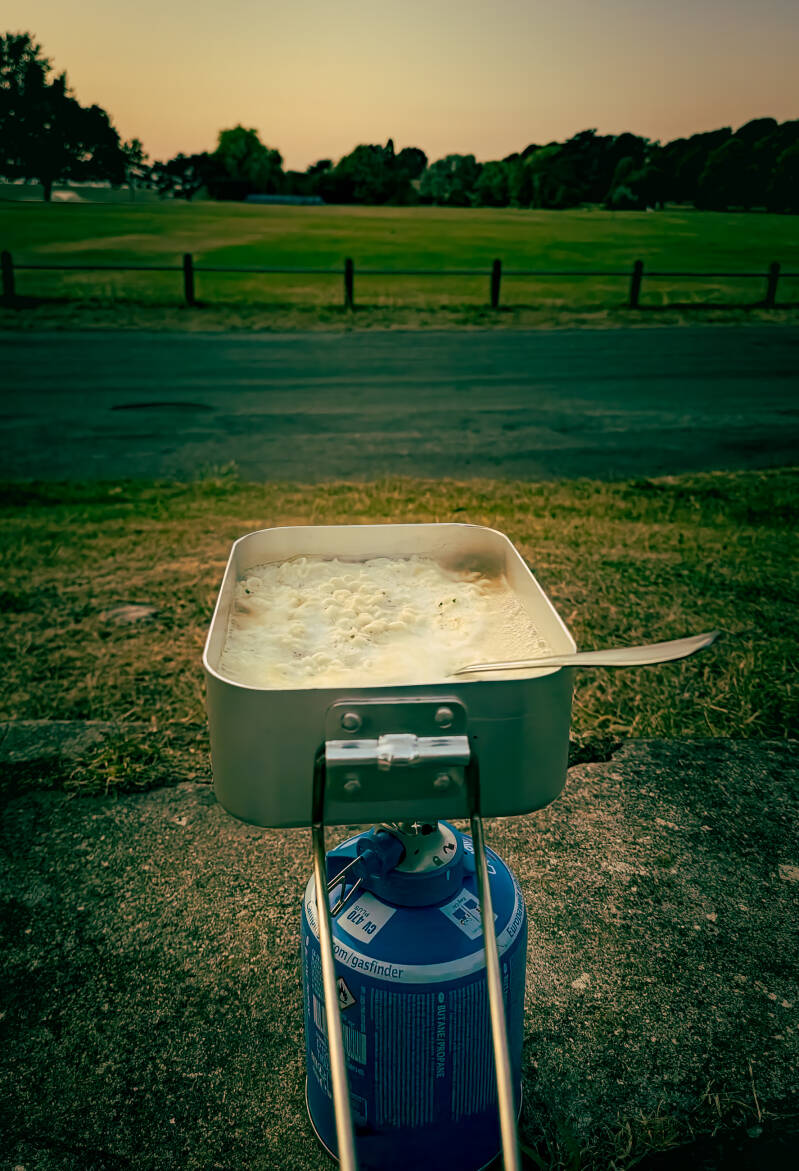
Dinner Outside.
14 July 2026 | North Somerset
Cooking an evening meal on a small camping stove while living from the car. Food, water, washing, charging and somewhere to sleep had all become jobs that had to be planned rather than ordinary domestic routines.
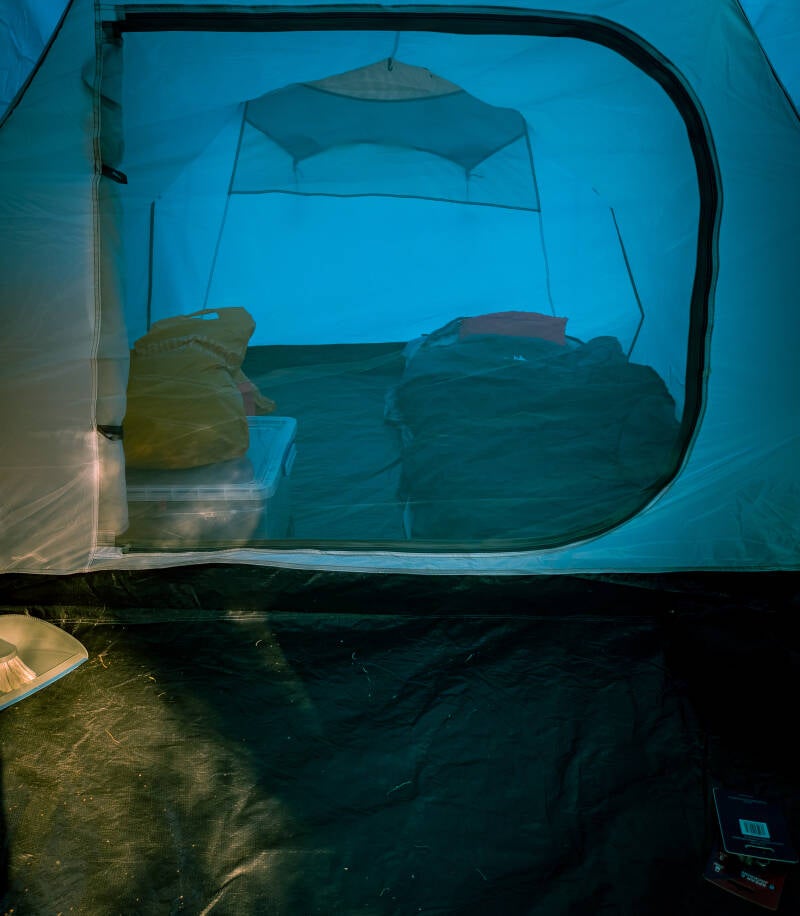
Inside for the Night.
15 July 2026 | North Somerset
Inside the tent that became my temporary home after I recovered my camping equipment. A space designed for occasional camping became somewhere to return to after work.
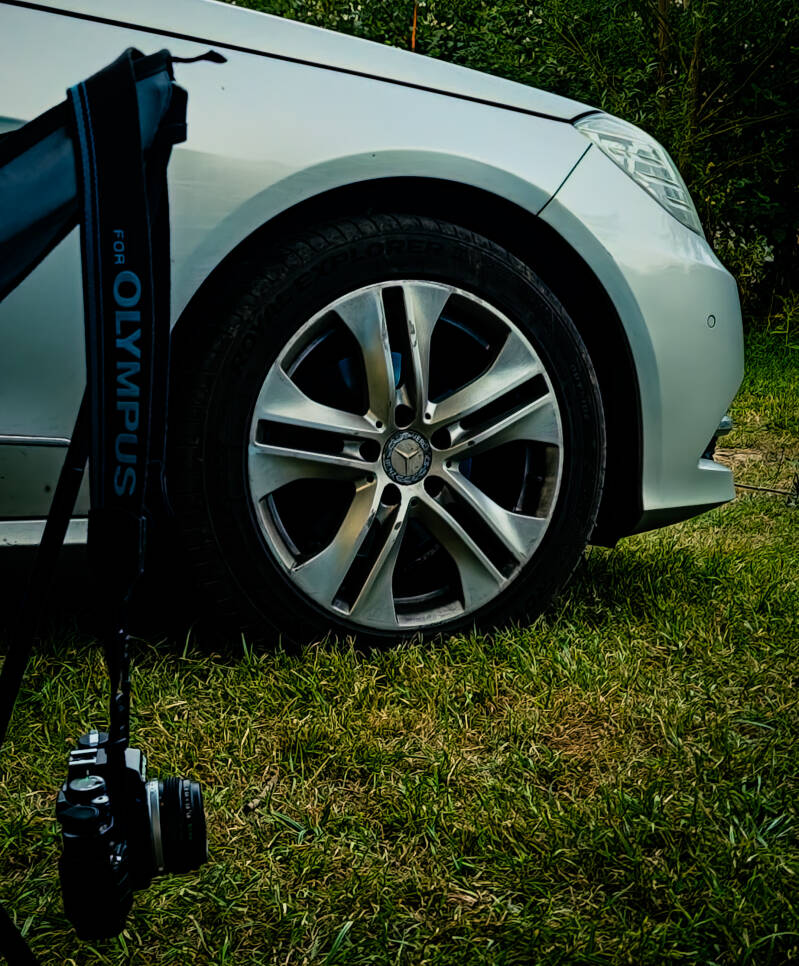
The Car and the Camera.
15 July 2026 | North Somerset
The camera beside the car at the campsite. Photography was not separate from what was happening; the camera travelled with the same belongings, work kit and camping equipment. Making the project meant deciding when to photograph from inside the situation rather than arriving later as an observer.
Work Comes Home.
July 2026 | North Somerset
Work boots, trainers and a spanner inside the tent. I was still working full time, so one part of my life continued almost unchanged while the place I returned to each night had completely altered.
After Dinner.
27 July 2026 | North Somerset
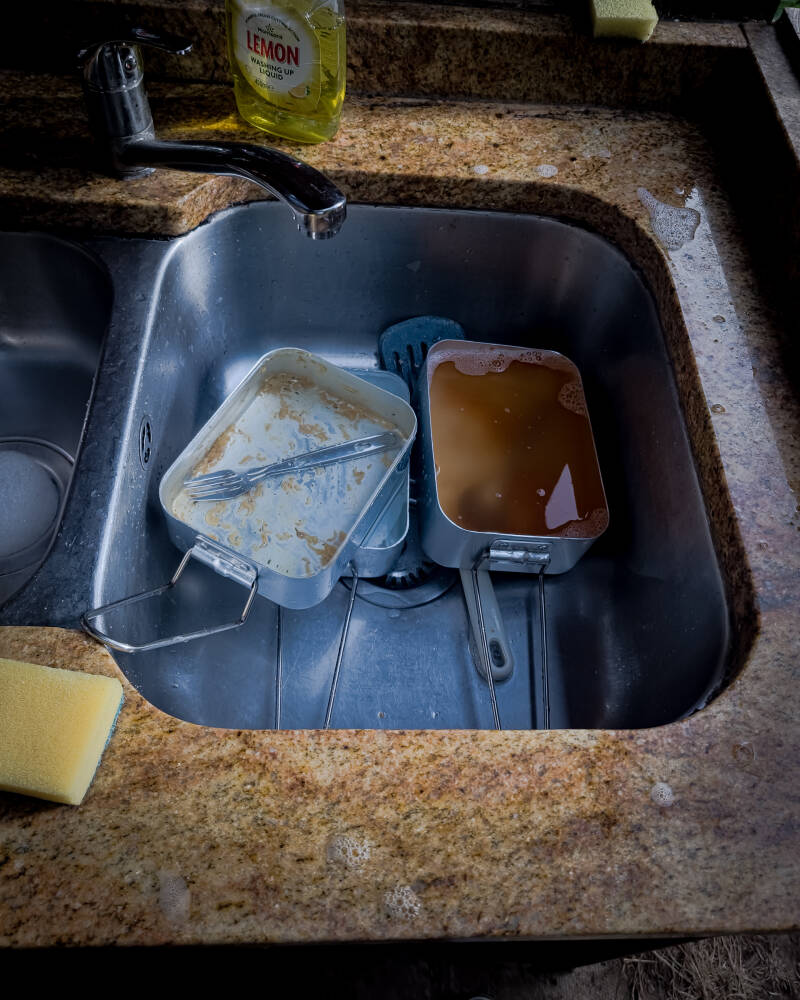
Washing up after a meal at the campsite. Ordinary domestic jobs continued, only the place they happened had changed. A sink, clean water and somewhere to leave things stopped being background conveniences and became part of the daily logistics.
Temporary Home.
15 July 2026 | North Somerset
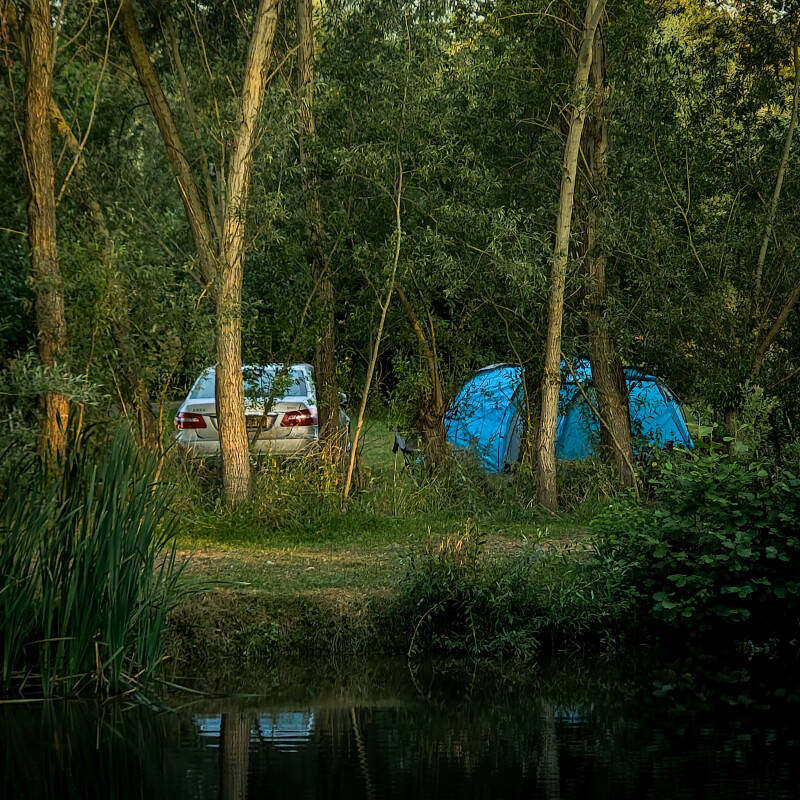
The campsite seen across the water. After several nights in the car, the tent provided somewhere I was actually supposed to be for the night. From a distance the scene could look peaceful, which is part of the project's tension between apparent freedom and the reality of having no secure home.
A Fixed Address.
2 August 2026 | Bristol area
The keys to the rented room I moved into after 23 nights without secure housing. The project continues beyond this point, looking at what remains after somewhere safe to sleep has been found.
Moving In.
2 August 2026 | Bristol area
Bags, camera equipment and belongings on the bed in the rented room after I regained secure housing. Getting a room changed the immediate problem of where to sleep, but the project continues into the adjustment that follows.
Making the Bed.
August 2026 | Bristol area
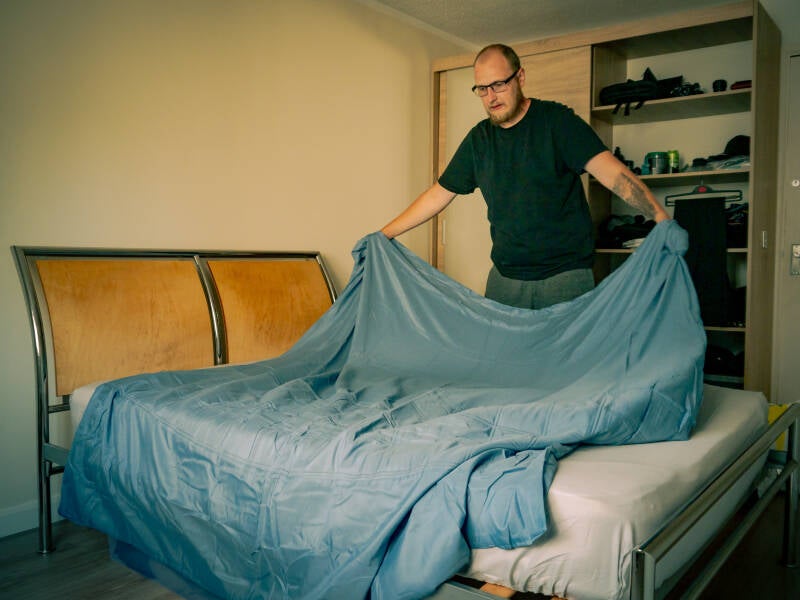
Making the bed in the new room. After weeks of converting a car and then a tent into places to sleep, this ordinary domestic action felt newly visible. It is also one of the few frames where I appear directly in the project, documenting the period after housing rather than treating the keys as a final ending.
A Room of My Own.
August 2026 | Bristol area
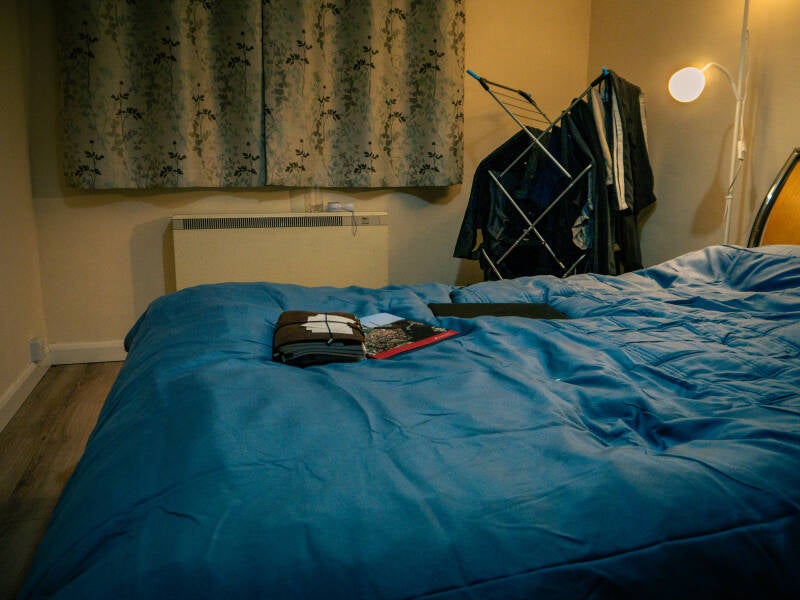
The bed, drying clothes, camera and album material in the new room. The project began with a bedroom that had to be hidden and packed away each morning; here the room can simply remain a room. It is a quieter ending, about permanence returning gradually rather than a single moment of resolution.
Thank you for reading and viewing this piece of documentary work. Please like and share to show your full support.
To see more work by Sam Singleton, please follow these links;
Website: https://sam-singleton.squarespace.com
Instagram: https://www.instagram.com/sam.singleton.photo/
YouTube: https://www.youtube.com/@samsingletonphoto
Twitch: https://www.twitch.tv/samsingletonphoto