What an earthquake leaves behind.
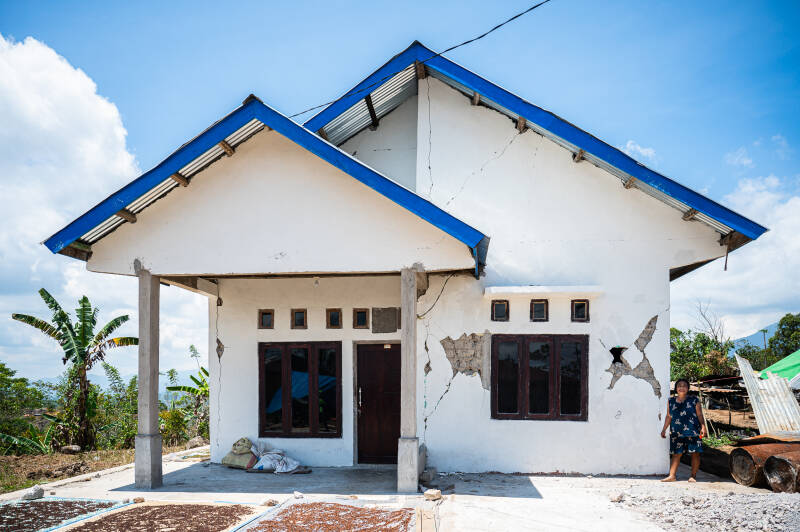
A woman stands in front of her earthquake-damaged home.
Cracks run across the walls of what, only a few weeks earlier, had been a place of safety. After the earthquake, even going back inside your own home can mean facing fear.
What Remains.
Ruteng, Flores, Indonesia — 9 September 2026
Photographs & text by Davide Turbino.
An earthquake gives no warning.
In a matter of seconds, what until a moment before represented normality can become something to run from: a home, a room, a bed, a corridor. Even a hospital.
I arrived in Ruteng twenty-five days after the earthquake struck the Indonesian island of Flores. The main shock had occurred weeks earlier, but in the days that followed, the ground had continued to tremble, and its consequences were still everywhere.
Families whose homes had been damaged were living in tents distributed by the authorities. RSUD Ruteng, the city’s public hospital, had also been severely damaged and evacuated.
The hospital — a place people normally turn to for help, care and protection — had itself become a place to escape from, and medical care had been moved beneath the tents of a temporary field hospital. The building was still there. Or what remained of it.
Ary Pelut, a hospital attendant, accompanied me inside.
As we walked through damaged corridors and rooms, Ary told me what had happened: the fear, the escape, the destruction, the injured patients. I had not lived through the earthquake. He had.
At that moment, I thought of Charon, the ferryman in Dante’s Inferno. Like a ferryman, Ary was guiding me through what the earthquake had left behind in those rooms. With each of his words came objects, cracks, dust, empty spaces.
I was seeing the aftermath; he was telling me about what had come before, and about the instant when everything changed.
Through his voice, the silence began to carry a different weight. For a moment, the empty spaces filled with people again. A hospital should be made of voices, footsteps, people, waiting. Now, there was only absence.
The beds had been carried out of the now-empty rooms. Medical equipment lay scattered across the floor. Dental chairs were covered in dust and debris fallen from the building, cracks running across its walls… Then, among the rubble, a pair of shoes.
Two shoes may seem insignificant, yet they can tell us something a cracked wall cannot: they evoke the act of fleeing.
That moment when there is no time to choose what to take with you, when objects suddenly lose their importance and everything is left behind because only one priority remains: to get out, to get away, to survive.
That was when the way I looked at the place began to change.
I stopped photographing only what the earthquake had destroyed and began photographing what it had left behind: displaced objects, instruments stripped of their function, spaces built to be constantly passed through, suddenly motionless.
Absence had taken on a form.
What Remains grew out of that emptiness and out of what, paradoxically, continued to fill it.
The earthquake had happened twenty-five days earlier, yet through the stories of those who had lived through it, it seemed to happen again. Their accounts restored sound, movement, fear and presence to what could no longer be present in the photographs.
Sometimes the memory of an event can be even more unsettling than its visible trace.

The field hospital set up after RSUD Ruteng was evacuated.
Medical care continues under tents, away from the damaged building. In the background, the church seems to watch over this fragile place of care and protection created by the emergency.
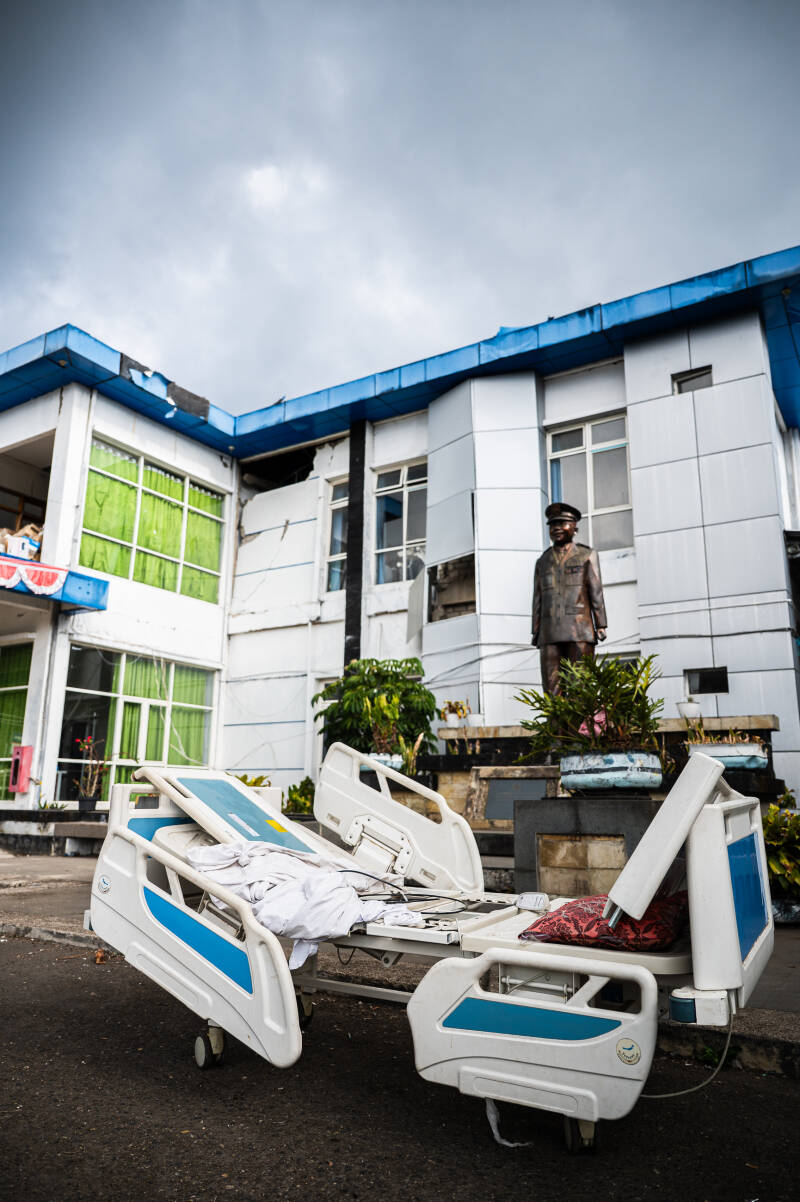
Hospital beds moved outside after RSUD Ruteng was evacuated.
Empty, in front of the damaged building, they are among the first visible traces of the flight from the hospital.
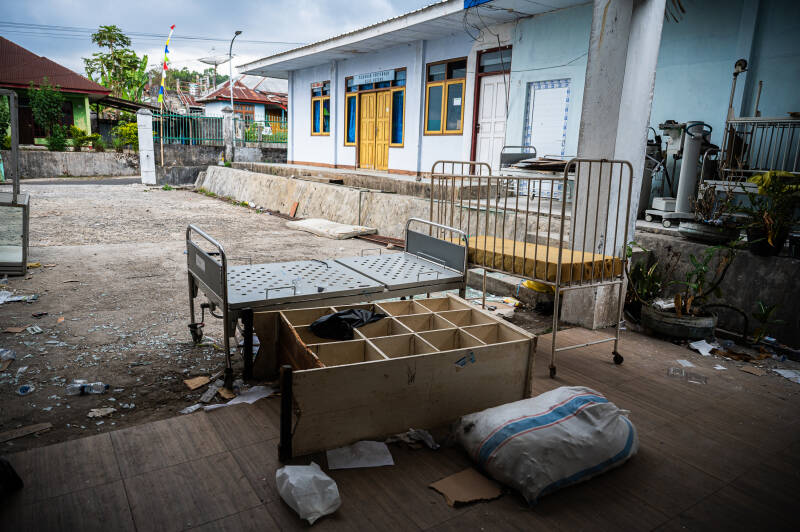
Beds and medical equipment left outside RSUD Ruteng.
What once belonged to the hospital's everyday life now occupies courtyards and passageways. Objects displaced after the emergency forced the hospital to empty.
The story continues where the image ends.
It travels through the empty space, crosses it, amplifies it.
Like an echo.
And perhaps it was precisely that echo that gave such power to the elements left behind, bearing witness to a deafening absence.
What Remains does not, therefore, tell the story of the earthquake as it happened — I was not there. It looks instead for what continues to exist afterwards: in objects, in spaces and in memory.
Because an earthquake does not destroy only walls and structures. It interrupts gestures, habits, places. In a matter of seconds, it can transform what we consider stable and safe into something from which we need to protect ourselves.
At the end of our journey through the hospital, I photographed Ary standing beside a deeply cracked wall.
In that final living presence was the memory of what had happened.
My Charon had escorted me to the end of the journey, through what remained, allowing me to see not only the destruction, but rooms that were no longer rooms.
The silence after the fear.
The emptiness after the escape.
The traces of a life suddenly interrupted.
What Remains is what is left when what we believed to be stable no longer is.
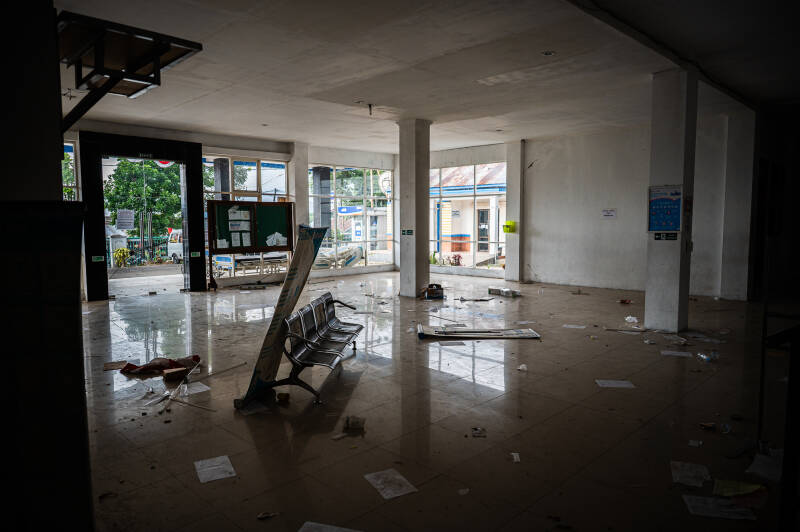
A waiting room with no one left to wait.
Empty chairs, fallen panels, papers and objects scattered across the floor. Twenty-five days after the earthquake, silence has replaced the people who once moved through this space.
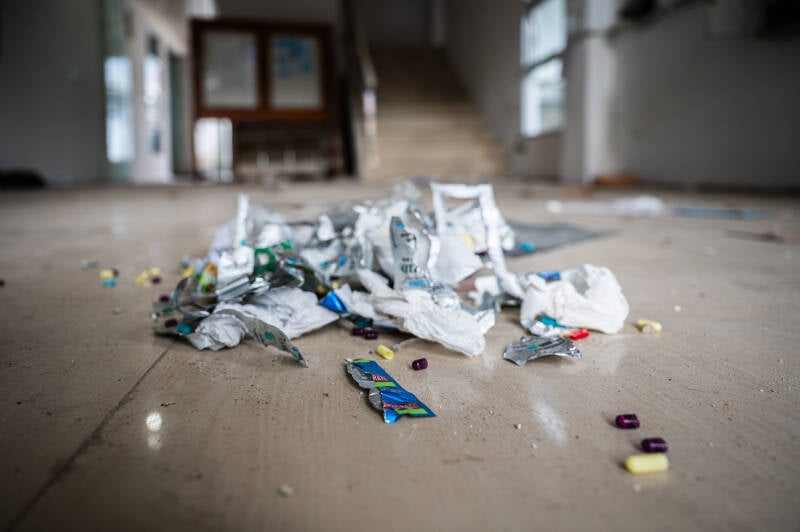
Medicines scattered across the floor of the evacuated hospital.
Twenty-five days later, they are still there. In the emptiness of the building, the disorder retains a trace of the haste with which these rooms were abandoned.
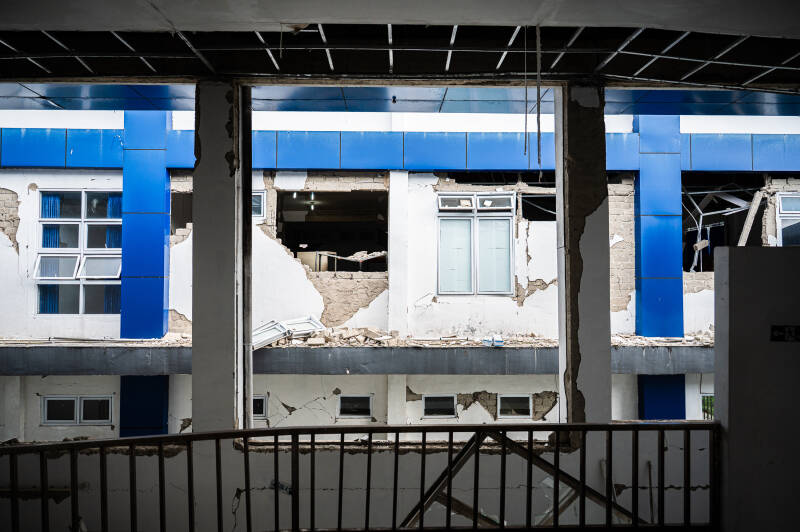
Inside RSUD Ruteng, twenty-five days after the earthquake.
Broken walls have opened rooms and corridors into one another. The architecture bears the wounds of the earthquake; the silence, those of the evacuation.
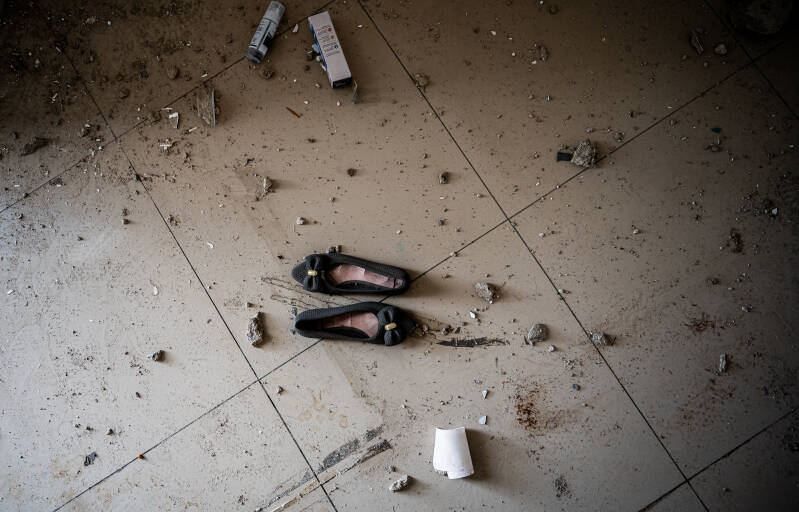
A pair of shoes abandoned during the escape.
Twenty-five days later, they are still there among dust and debris, at the place where someone left them behind and kept running.
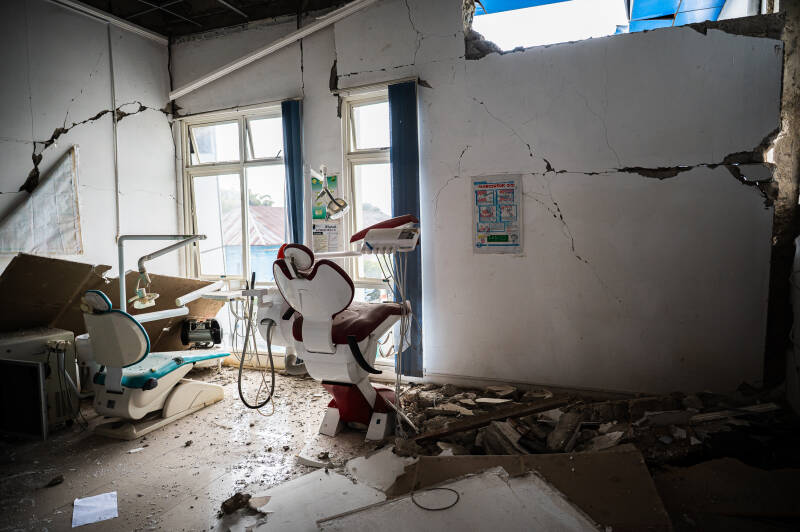
The dental chairs are still in place.
Around them, deeply fractured walls, dust and debris. Everything seems suspended at the moment when the room abruptly ceased to be a place of care.
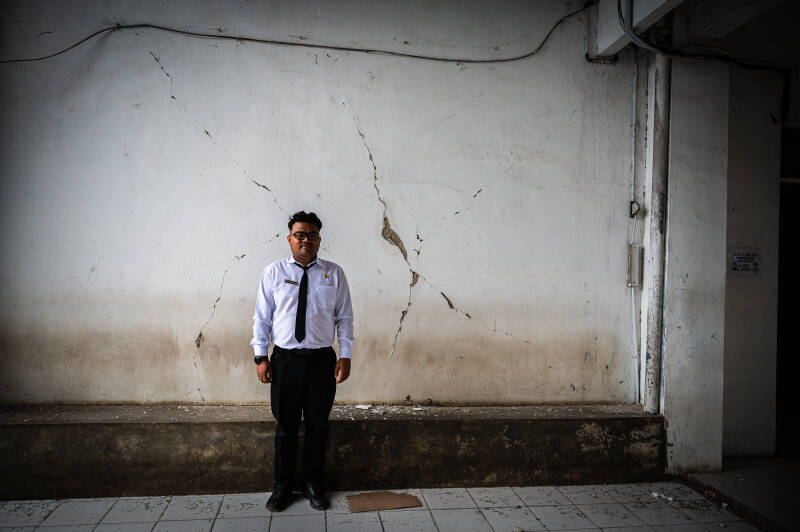
Ary Pelut, an attendant at RSUD Ruteng.
He guided me through the empty hospital, telling me about the fear, the escape and the injured patients. I was photographing what remained; through his words, that emptiness began to fill again with what had happened.
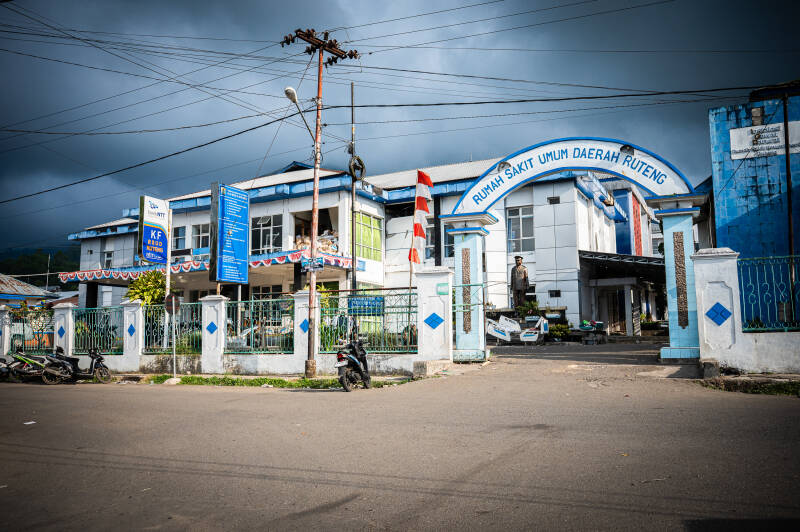
RSUD Ruteng, twenty-five days after the earthquake.
Cracks run across the façade as well. From the outside, the building still has the form of a hospital; behind those walls, rooms and corridors stand empty. The building remains. The life it once contained has moved elsewhere.