Examining the real cost of Coal in India.
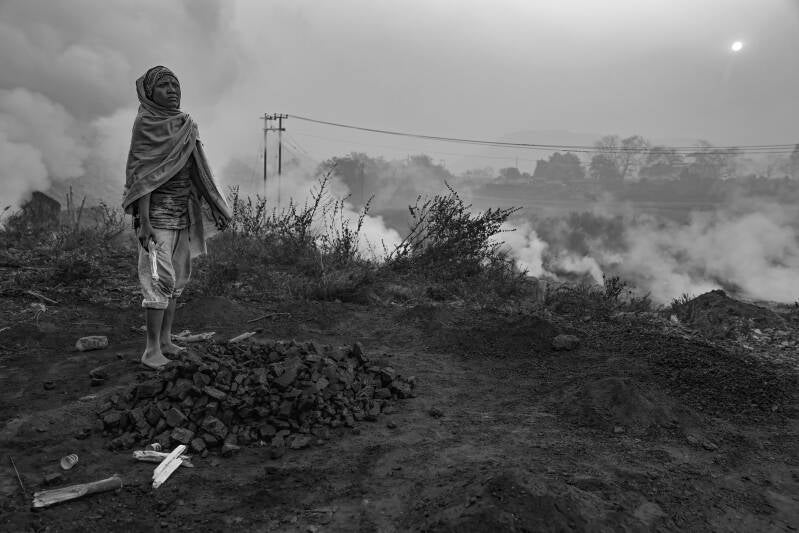
BURNING LAND - LIFE ABOVE THE UNDERGROUND FIRES OF JHARIA.
Photo report from the coalfields of Jharia, India by Knut Köhler.
A Fire Beneath the Earth.
In the eastern Indian state of Jharkhand lies one of Asia’s largest coal-mining regions. Around the city of Jharia – once a green landscape – underground fires burn through the coal seams. The fires ignite in open mine shafts and poorly sealed tunnels, sometimes through spontaneous combustion, sometimes through human negligence. Today, 70 such fires are officially registered. Unofficial estimates suggest three to four times as many. Some have been burning since 1916.
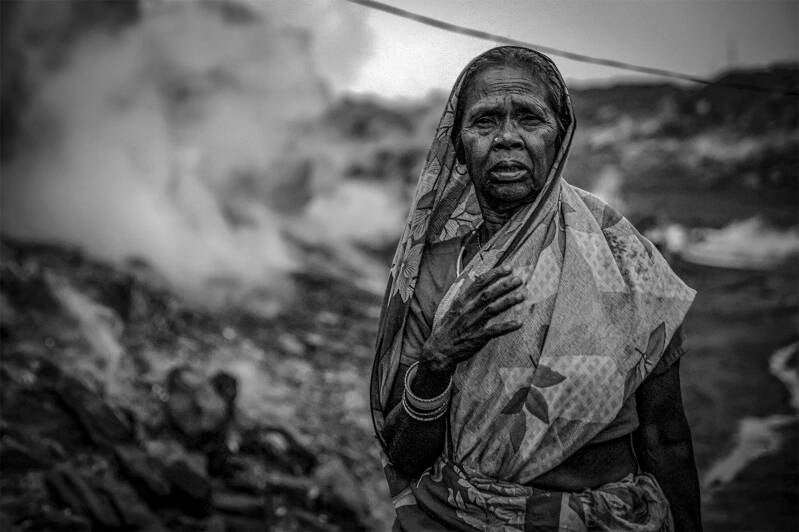
More than 700,000 people live around the burning mines – many of them directly above dangerous, hollow ground. Deep cracks run through the landscape, releasing toxic smoke. According to Greenpeace India, the region around Jharia experiences some of the worst air pollution in the country. The omnipresent smoke shapes the sky. It kills silently.
This reportage follows the daily lives of the people here, the risks they face, and the logic of survival deeply etched into the black dust.
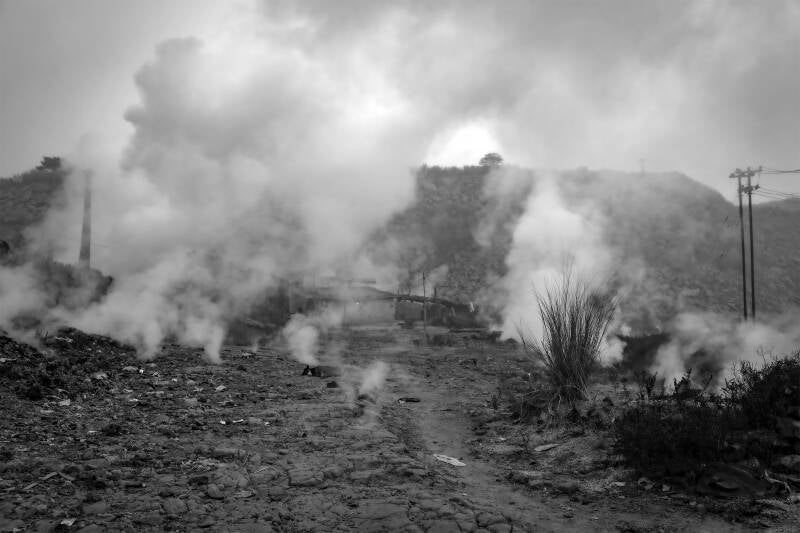
The Breath of Coal.
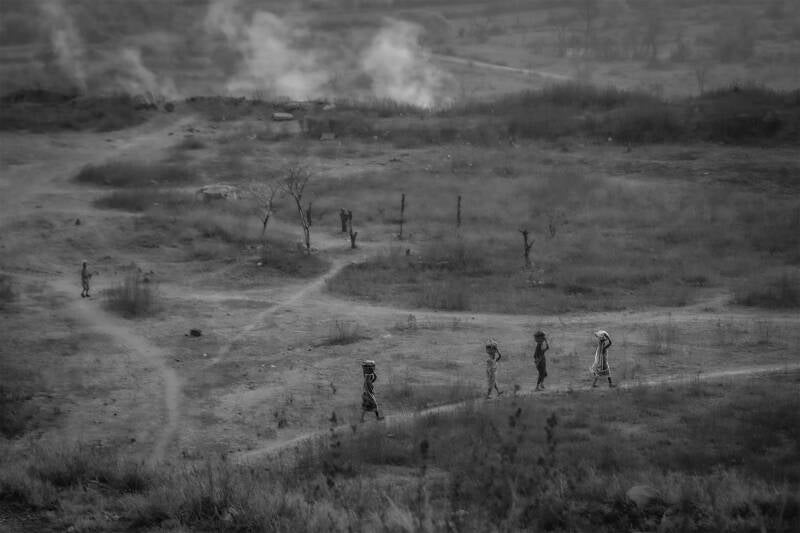
Smoke is the first and the last thing one sees in the region around Jharia. In some places it rises directly from the ground in thick plumes. The smell of sulphur hangs in the air. Houses stand only a few meters away from underground fires. The smoke that surrounds people every day seems to obey its own physics.
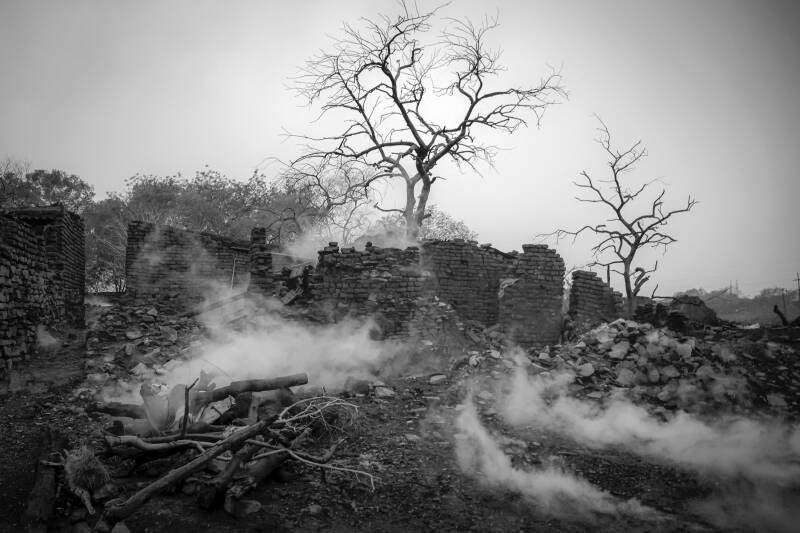
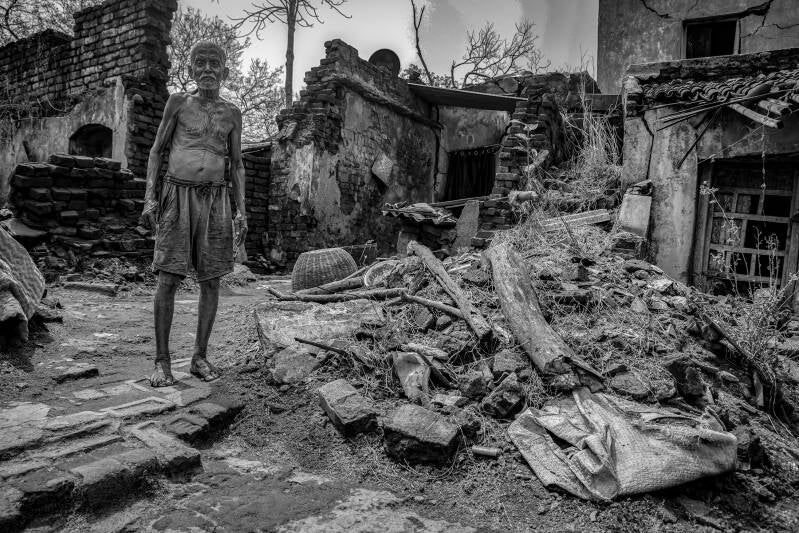
Some villages have almost completely disappeared due to ground collapses caused by the underground fires – leaving only fragments of walls behind. Cracks run through houses. Roads sink. Residents know the ground may give way at any moment. Here, that is normal.
All around them, open pits and slag heaps dominate the landscape. Where vegetation once grew, a lunar landscape remains, with only dead trees standing as silent witnesses to a distant past. Nature retreats, yet the people persist.
Wells provide drinking water that is warm and heavily polluted. In some areas arsenic has been detected. But there are no real alternatives. The toxins in air and water shorten lives. The average life expectancy here is between 50 and 55 years, about 15 – 20 years below India’s national average.
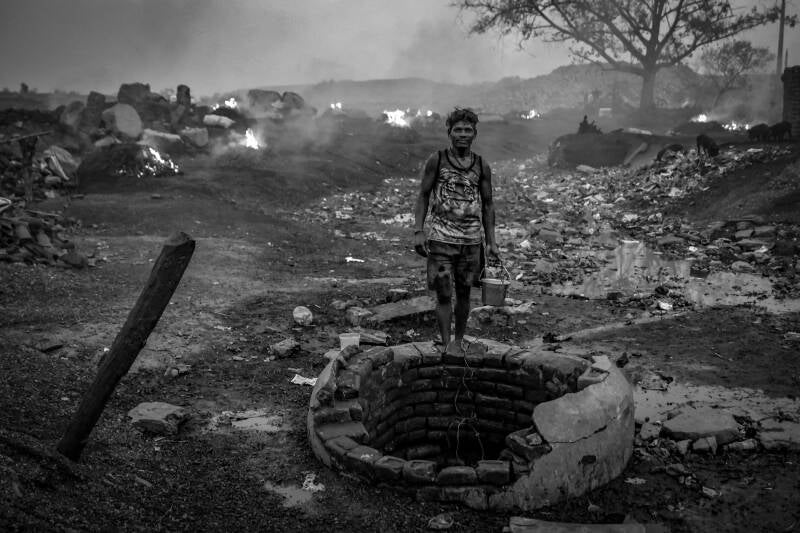
Living with Fire – Everyday Life in a State of Exception.
Despite the extreme conditions, much of daily life appears surprisingly normal. Children play in the dust, women cook over open fires, men repair bicycles or tend to their animals. Life continues – even here. The settlements look temporary but many have existed for decades. Corrugated metal roofs, crumbling walls, blackened clotheslines. Many families moved here because coal mining – legal or illegal – offers a source of income they could not find elsewhere.
Dawn in the Coalfields.
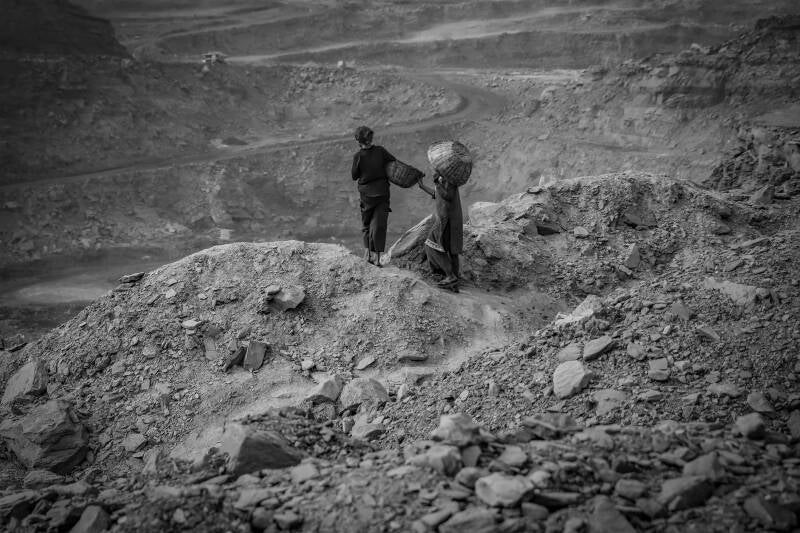
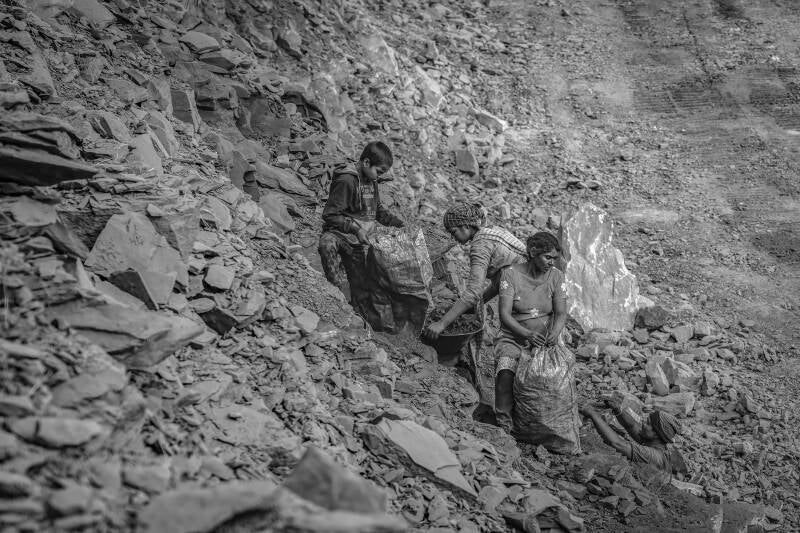
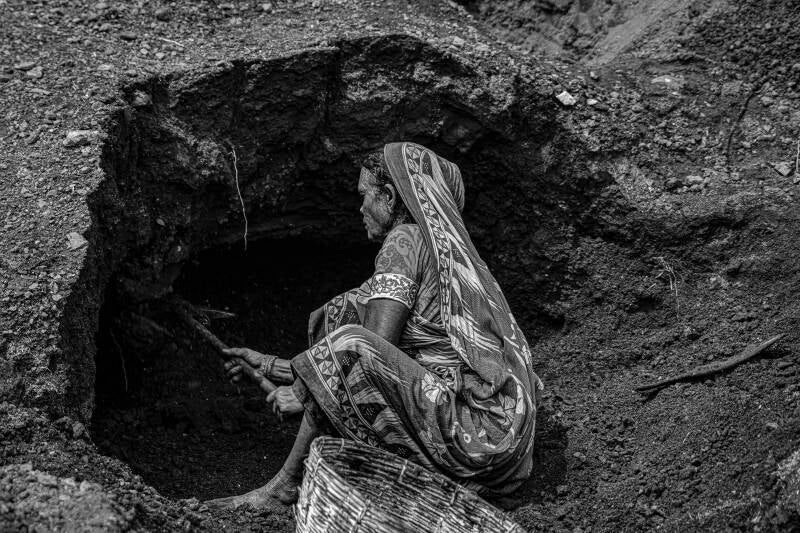
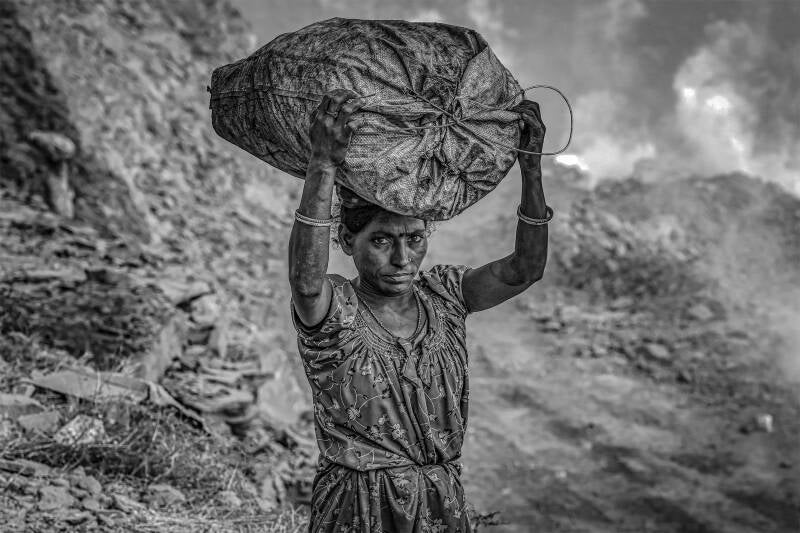
At dawn the shimmering heat above the ground becomes visible. A grey veil hangs over the landscape. The smoke smells of burnt earth, metal, and something indistinct that slowly eats its way into the lungs. Heat from the underground fires rises in faint waves – like a breath that has not rested for more than a century. Women with baskets and sacks, children with rusty shovels, men with improvised tools and pickaxes begin their work early. The day must start before the worst heat arrives. Everyone here knows: survival begins early.
Illegal Work – An Open Secret.
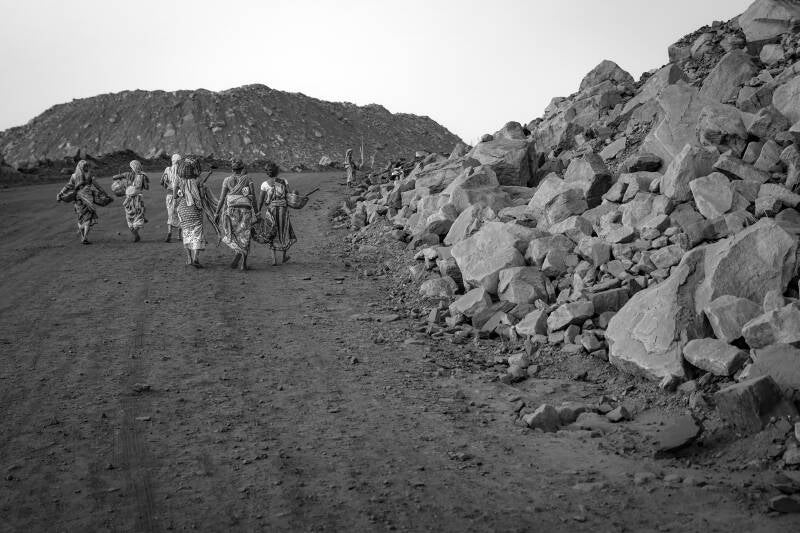
Alongside the state-run mining companies exists a shadow world: informal mines that scar the landscape like wounds. Thousands work here illegally. The mining is visible, organized – and officially invisible. Small groups dig in abandoned shafts or along the edges of authorized mining areas. The risks are enormous: tunnel collapses, toxic gases, sudden flames, flooding. Yet workers return every day. Poverty leaves little room for caution. No one speaks openly about the people who have died in tunnel collapses or other accidents. No one knows the real number.
Jharia is a place without reliable statistics – but with very reliable dangers. What appears life-threatening to outsiders is, for the local population, a calculated necessity.
Transport from the Mines to the Villages.
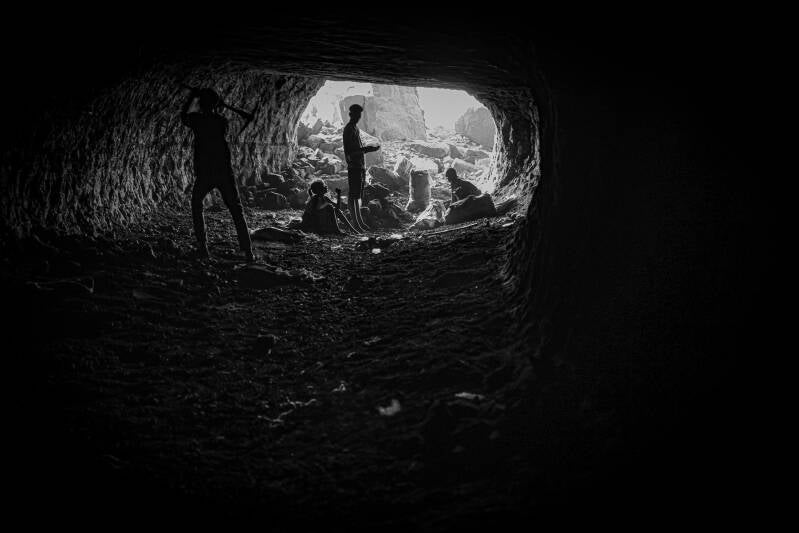
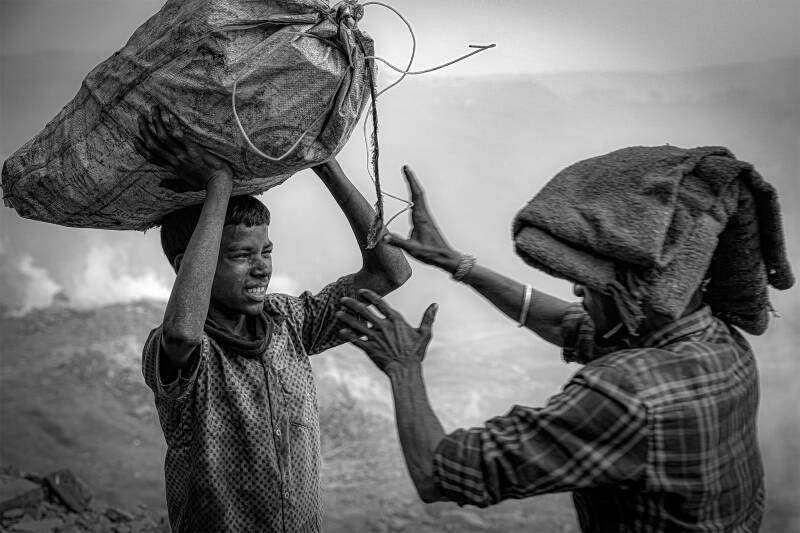
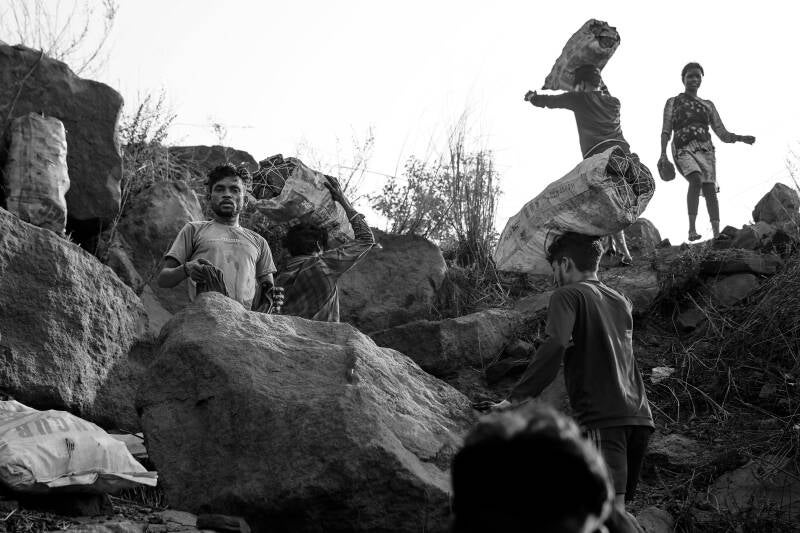
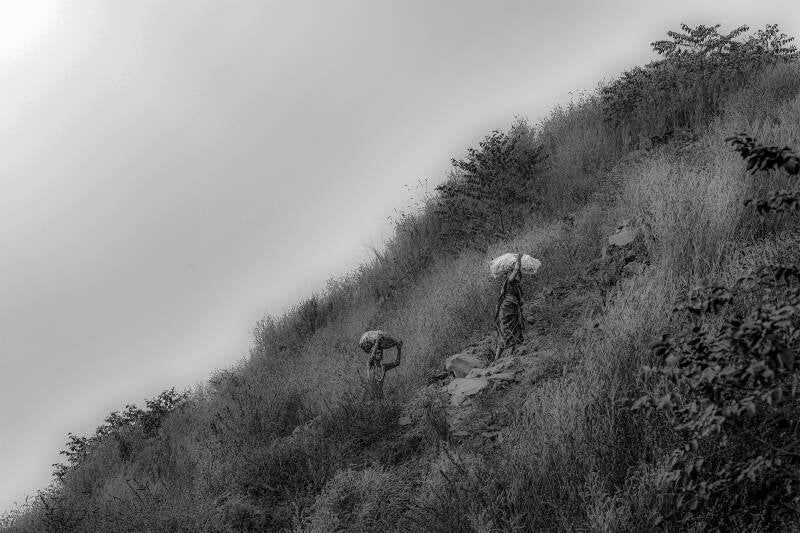
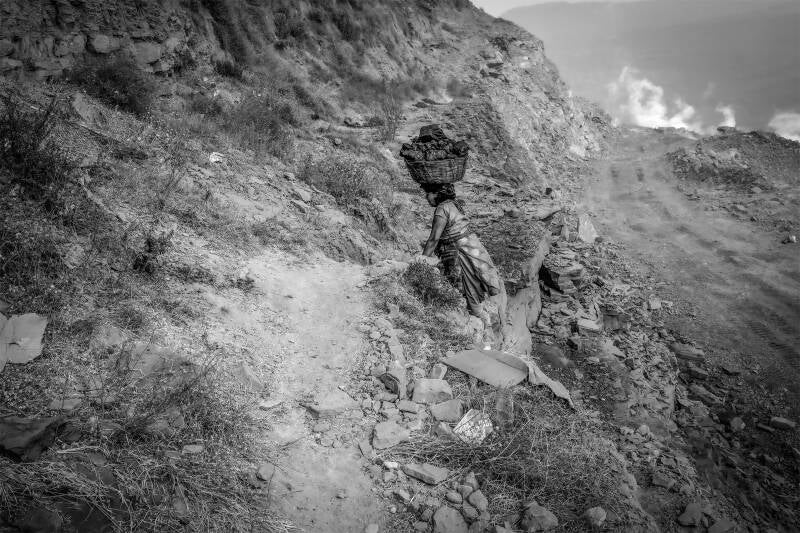
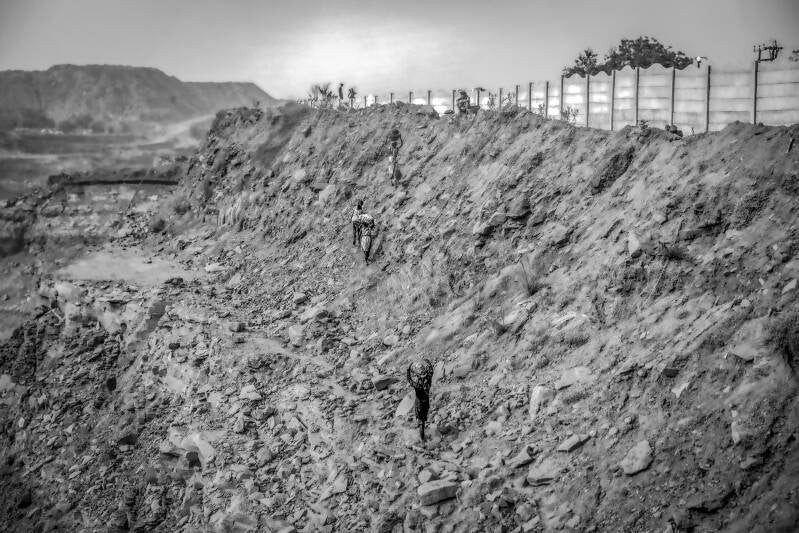
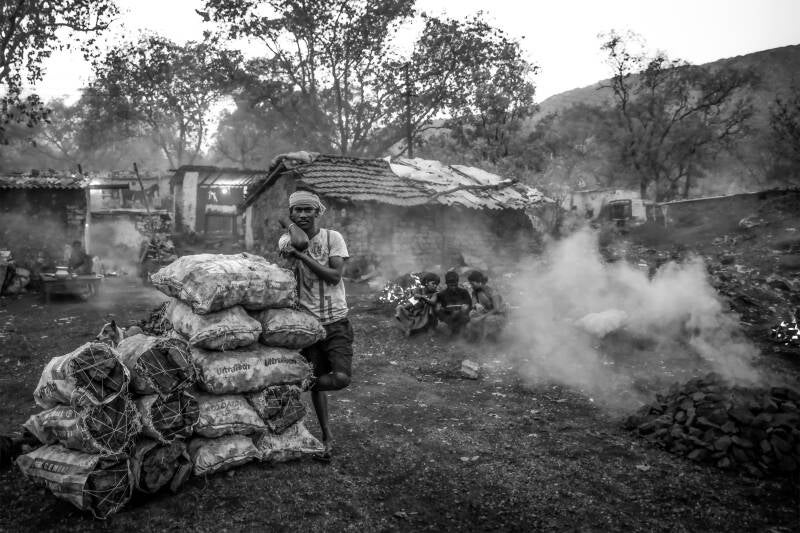
Once the sacks and baskets filled with the “black diamonds,” as locals call coal, are ready, the long journey from the mining sites to the villages begins. The loads – sometimes weighing up to 40 kilograms – must first be carried up steep slopes to collection points near the roads. If several workers manage to join forces, the sacks are transported from there by bicycle. Others carry the coal on their heads all the way back to the villages.
The heat of the ground makes every step heavier. Many walk these paths barefoot.
Coking.
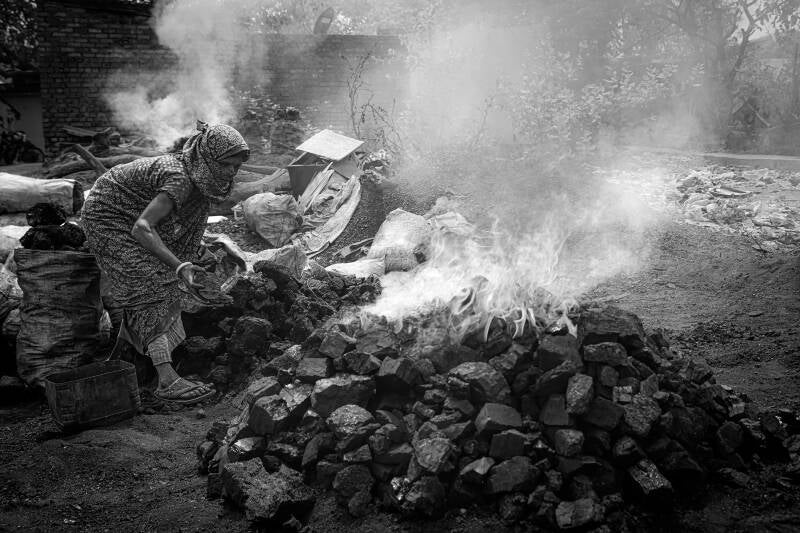
Back in the villages, the coal is refined overnight through a process known as coking. The coal is burned in circular fires directly beside the houses. During this process, large quantities of fine dust, tar and soot particles, carbon monoxide, sulphur dioxide, nitrogen oxides and heavy metals are released into the environment without filtration. What remains is solid carbon – coke – with a very high calorific value. But what also remains is an extreme health burden for the people living right next to the coke fires.
Traders and Middlemen.
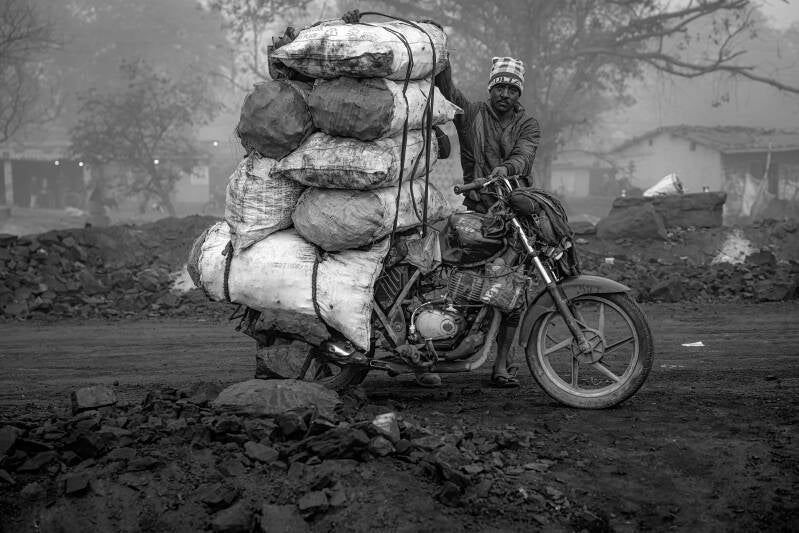
In the morning the coke is packed into sacks. Buyers pay about 200 rupees per sack (around two euros) and transport them by bicycle or motorcycle to middlemen. From there trucks carry the cargo to larger depots.
No one speaks openly about the system, but everyone understands how it works. Informal networks control the illegal trade. They profit from poverty, corruption and political inaction. Those who stand in their way live dangerously. Journalists are threatened, activists beaten or disappear. People call it the “coal mafia,” though the term oversimplifies the system. In reality it is a network born out of necessity, opportunism and corruption – and a sign of a state that fails to protect its poorest citizens. The coal mafia reaches into administration, police and politics alike.
According to an estimate by the Central Bureau of Investigation, the Indian State loses roughly 1.1 billion euros annually through coal theft and tax evasion, much of it in Jharkhand.
Childhood – A Future on Unstable Ground.
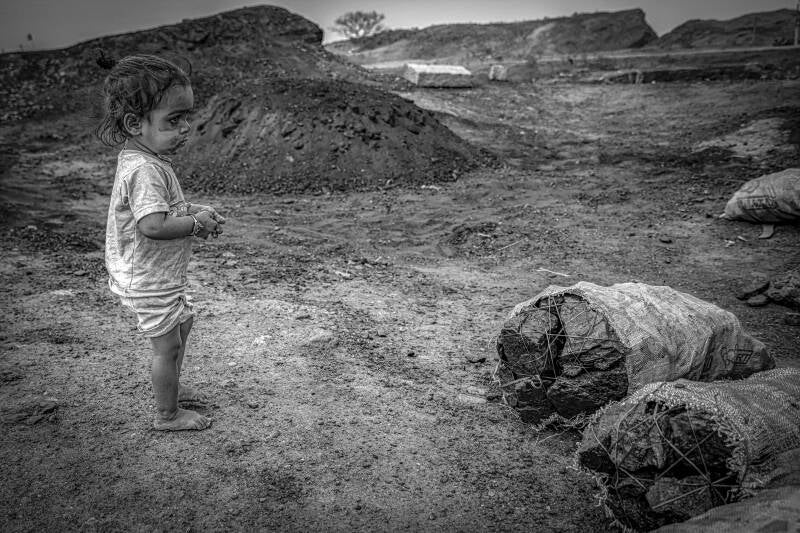
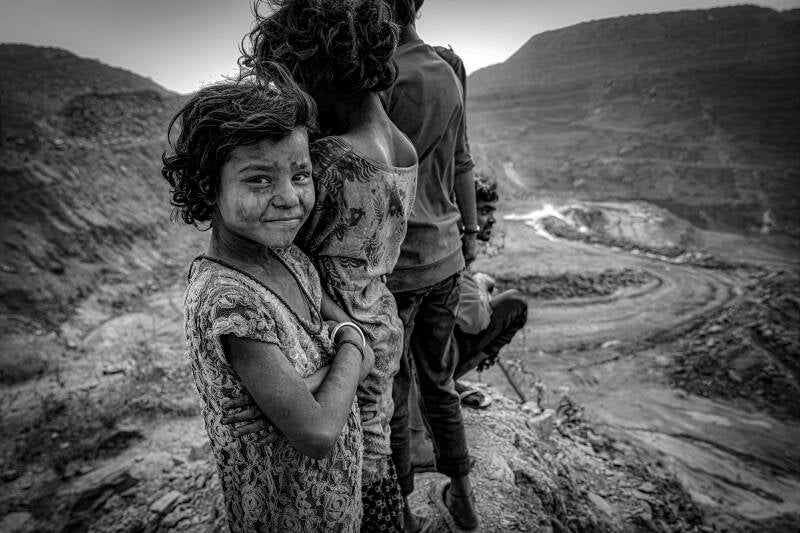
Children grow up here with the fire. They learn early to read the smoke: where it drifts, whether its colour changes, whether the ground from which it rises is still safe.
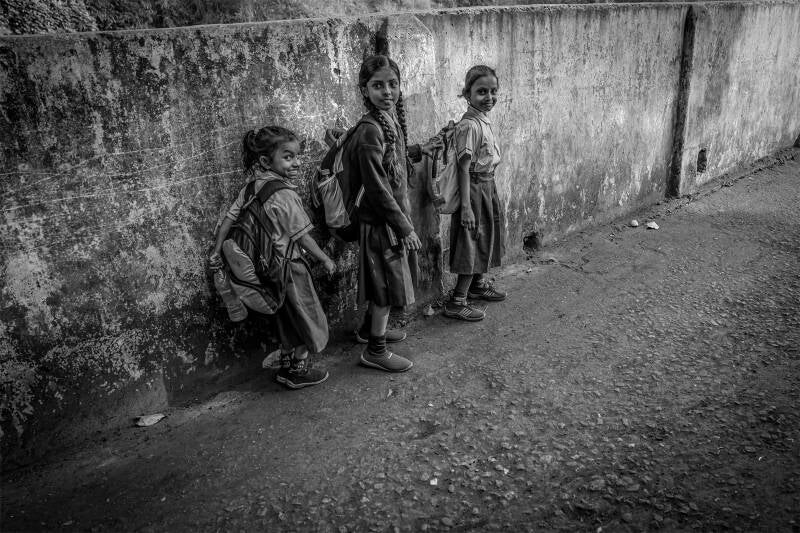
They also learn early to work. Many attend school for only a few years. By the age of eight or nine they already help their parents collect coal. Their hands are blackened with soot, their faces often serious. Education is a promise that often crumbles under the weight of daily survival. A sack of coal today means food today.
For many young people the coalfields appear to offer the only future. Jobs outside the region are scarce, opportunities for training limited.
And so the cycle continues.
When the Circle Closes.
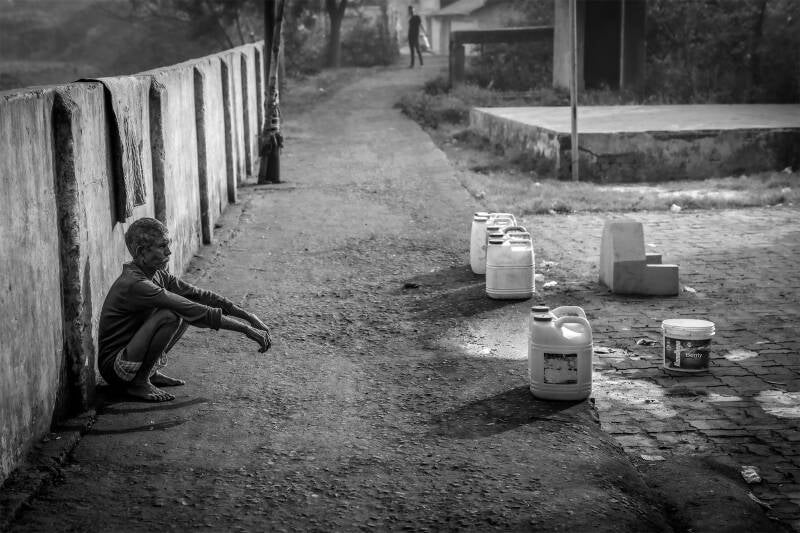
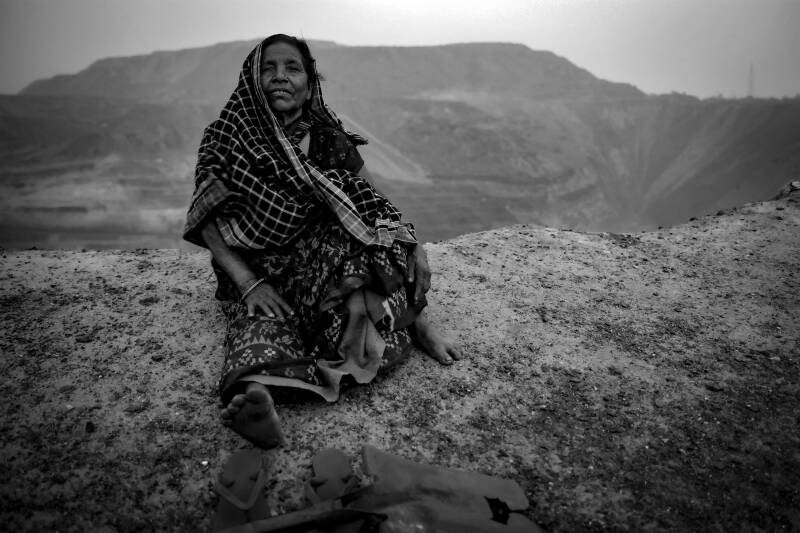
Older people often suffer from severe joint pain, breathing problems and heart disease. They know the burning land will eventually kill them. Yet they do not want to spend their final years elsewhere.
“We have lived here for generations,” says an elderly man. “We were born here, we live here, and we will die here. That is our destiny.”
Resettlement Attempts: Belgaria.
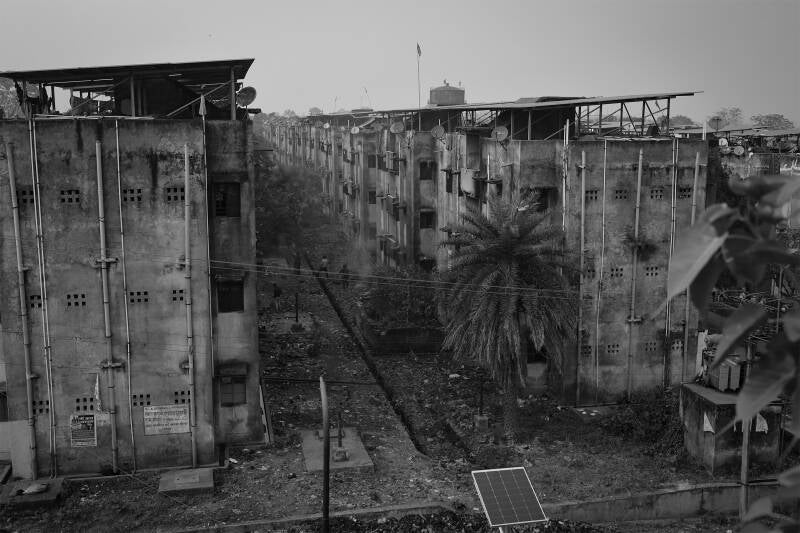
Over the years the government has launched programs to relocate residents to safer areas. Belgaria is one of these resettlement sites outside the most dangerous zones. Here stand quickly built apartment blocks – rectangular, orderly, efficient.
Authorities like to present the place as a success story.
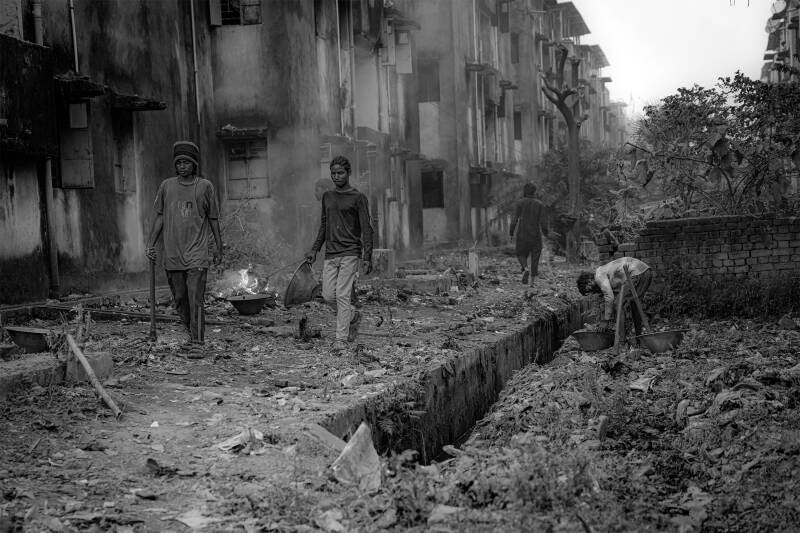
Yet many relocated families return to their old villages. The reason is simple: near the coal there is work. Elsewhere there often is not. Many also feel out of place in the new settlements – not out of nostalgia, but because they cannot find their role in the new life.
The villages around Jharia may be unsafe – but they are home. And home is not rational.
Pride and Dignity.
Despite the harsh living conditions, one frequently encounters people in the settlements around Jharia who radiate pride and dignity.
People who laugh, share, celebrate and look at their lives with pride.
Their stories are not only stories of poverty. They are also stories of solidarity, resilience and a deeply rooted belief in a destiny determined by God – a destiny that must be accepted.
A Land That Keeps Burning.
Jharia is a place of extremes: fire beneath the earth, life above it.
As long as coal provides income and alternatives remain scarce, life above the underground fires of Jharia will continue.
The inferno below the surface may remain largely invisible – but the stories of the people living above it are not.
Thank you for viewing this extraordinary report by Knut Koehler. Please like and share to show your support for this type of work.
You can see more documentary photography by Knut at this link.