Life on a Welsh island after the known industries have left.
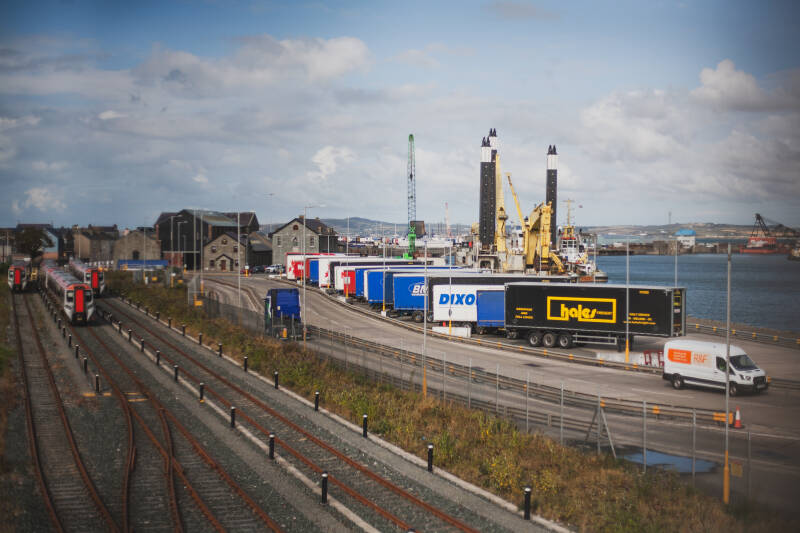
Holyhead, Anglesey, 2026. The port is the main gateway between Holyhead and Ireland.
IT’S A NICE PLACE IF YOU HAVE A JOB - Anglesey after industry.
Photos & text by Jose Baker.
I arrived in Holyhead and was greeted by a crowded skyline, a jumble of old and new architecture fighting for position.
I had assumed Anglesey was somewhere people came to leave. The port seemed to reinforce that idea. From the Celtic Gateway bridge, it stretched out towards the sea, carrying people and vehicles on towards Ireland.
But Holyhead was more complicated than that. Making my way into town, I passed a closed pub with a caravan parked beside it on the road towards the port. It was one of the first things that made me stop and look more closely at what was around me.
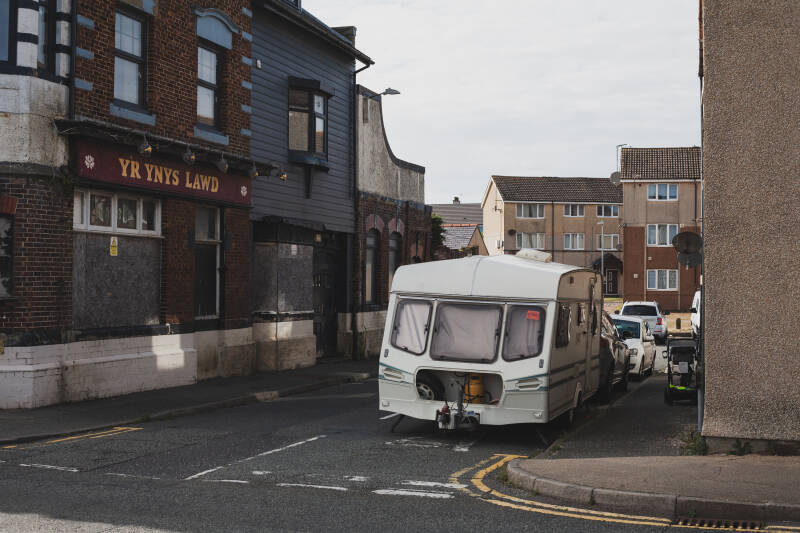
Holyhead, Anglesey, 2026. A caravan is parked beside the closed pub on the road adjacent to the port.
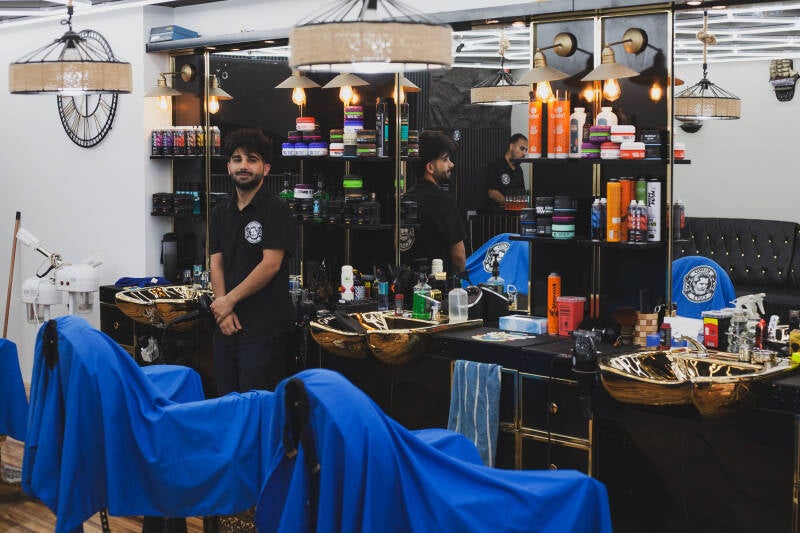
Holyhead, Anglesey, 2026. The barbers had opened only a month earlier. “It’s a nice place. We have been open a month and are doing OK.”
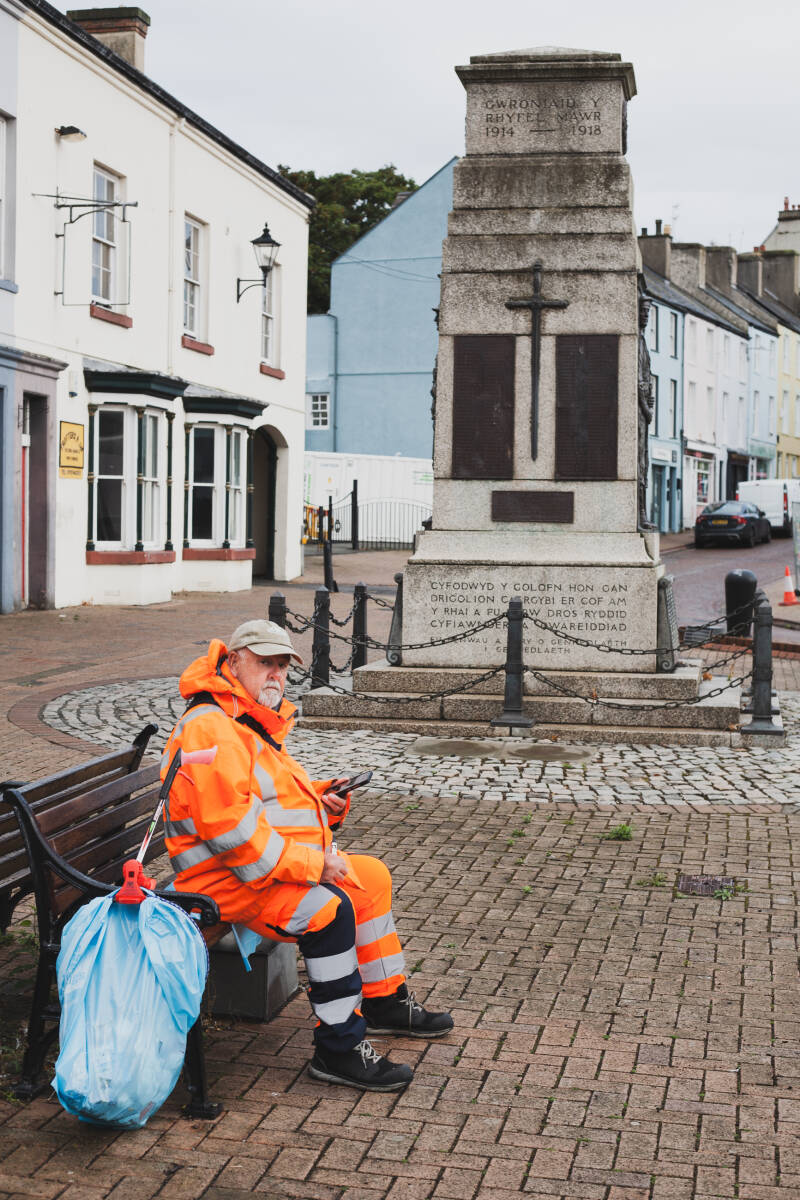
Holyhead, Anglesey, 2026. Nigel, a council litter picker, stands in front of the war memorial that carries his grandfather’s name. “It’s a nice town if you have a job. There’s lots of unemployment nowadays.”
Holyhead has long depended on industry and the port for employment. Nearby, Anglesey Aluminium was once one of the island's major employers, but its smelting operation closed in 2009. The port remains, but much of the industry that once surrounded it has gone.
I then met Nigel while he was working as a council litter picker. His grandfather's name is on the war memorial behind him. We talked about the town and how it had changed. He told me, “It’s a nice town if you have a job. There’s lots of unemployment nowadays.”
A few streets away, Kurd Kutz Barbers had opened only a month earlier. The owner told me, “It’s a nice place. We have been open a month and are doing OK.”
But this wasn't simply a story about what had disappeared. Against the backdrop of the port, the old industrial landscape and signs of new business, people were getting on with ordinary life. A father played football with his son on the seafront. The town carried on around them, largely unaware of the bigger changes taking place around it.
Further around the island, the landscape changed. At South Stack, tourists stopped to photograph the view. At Church Bay, people were camping beside the coast. Tourism was becoming a visible part of the economy, bringing people to places that had once depended on very different forms of work.
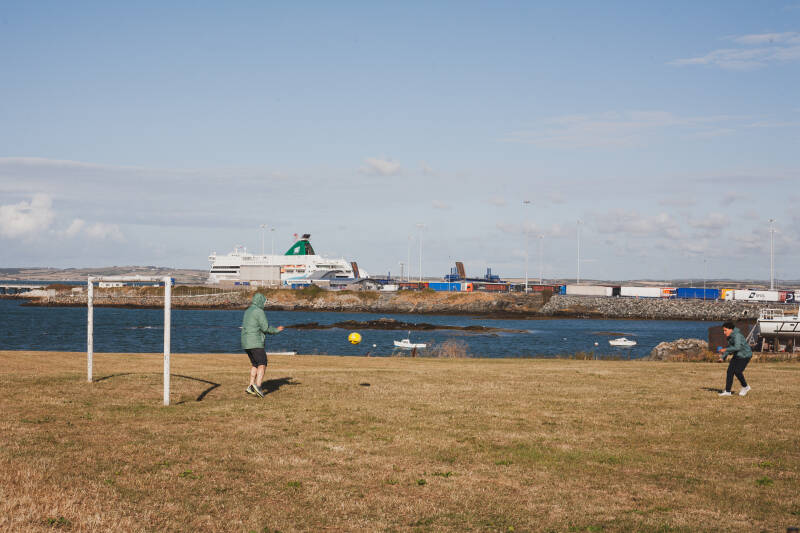
Holyhead seafront, Anglesey, 2026.
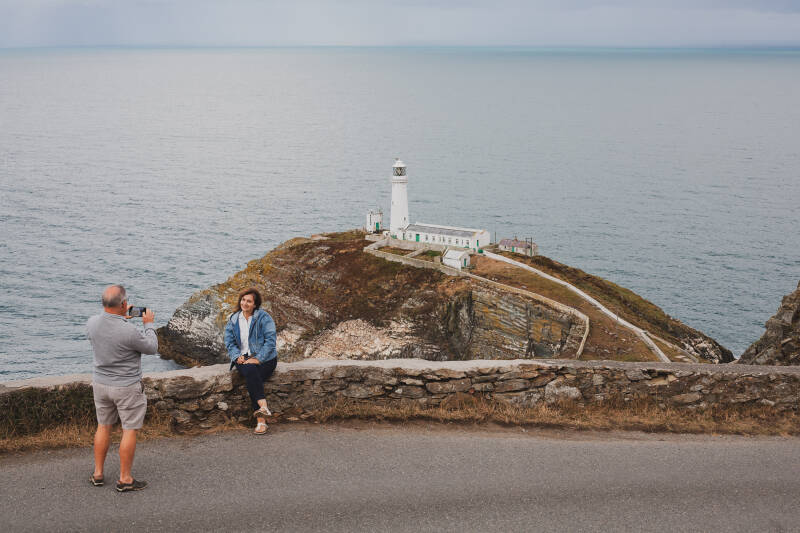
South Stack, Anglesey, 2026.
In Cemaes, I photographed women talking outside the laundrette. The town felt quieter than I had expected. A local landlady told me that it had become significantly quieter since Wylfa closed. She said more tourists had come since, but she would rather see the power station reopen and bring the town back to life.
Wylfa still dominates the landscape.
The nuclear power station began generating electricity in 1971 and the last reactor stopped generating in December 2015, after 44 years. Anglesey Council describes Wylfa as having provided stable employment during its construction and operation. The council has also linked the loss of Wylfa employment, along with the closure of other major employers such as Octel in Amlwch, to the economic difficulties experienced in North Anglesey.
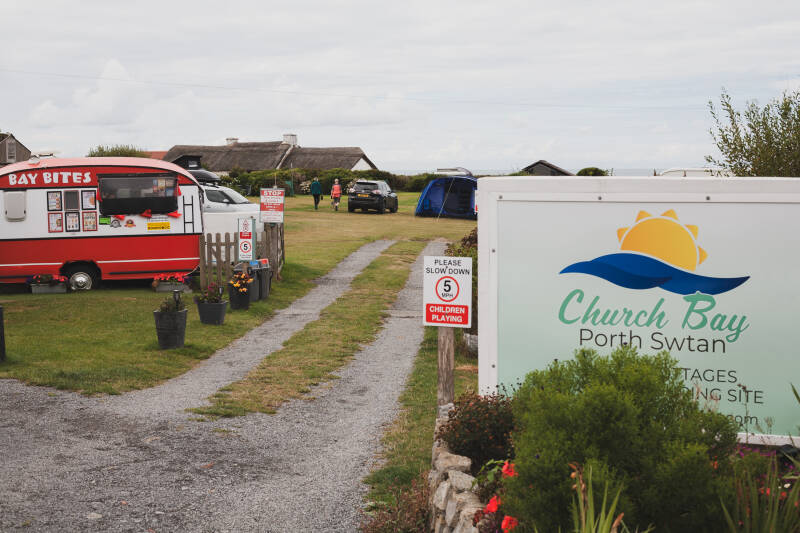
Church Bay, Anglesey, 2026.
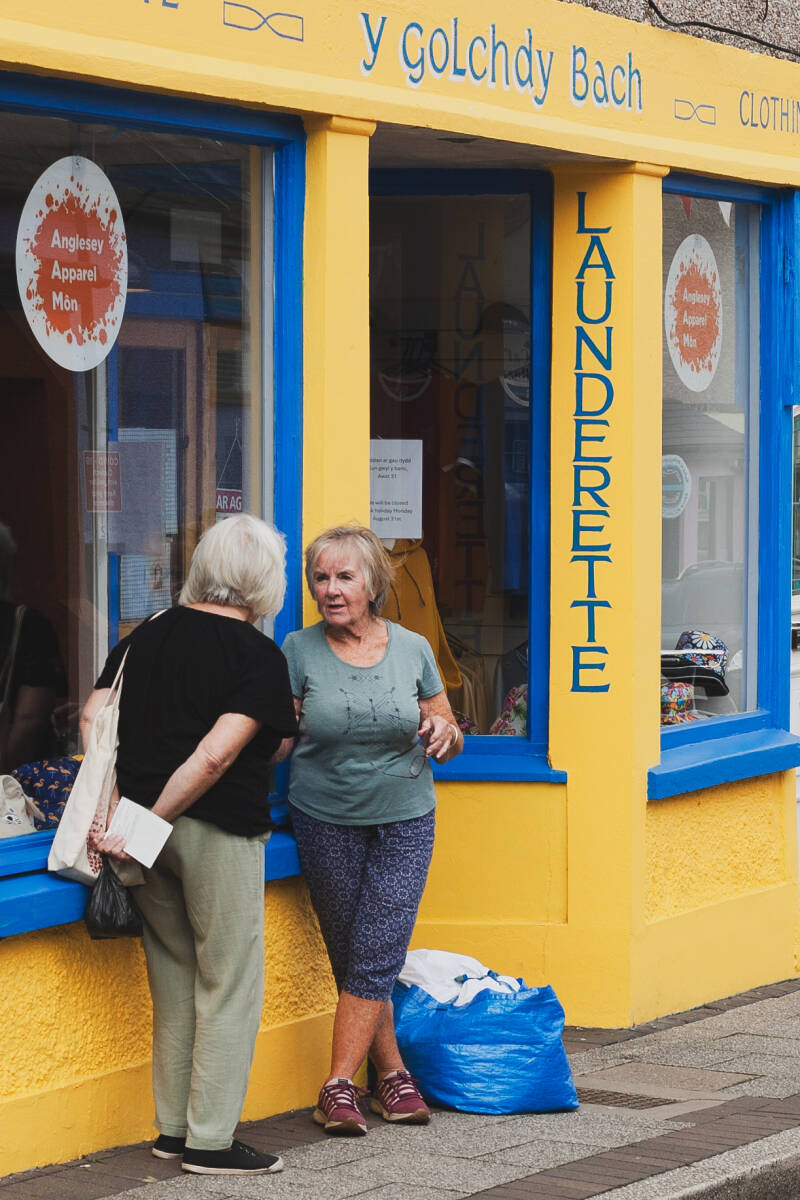
Cemaes, Anglesey, 2026.
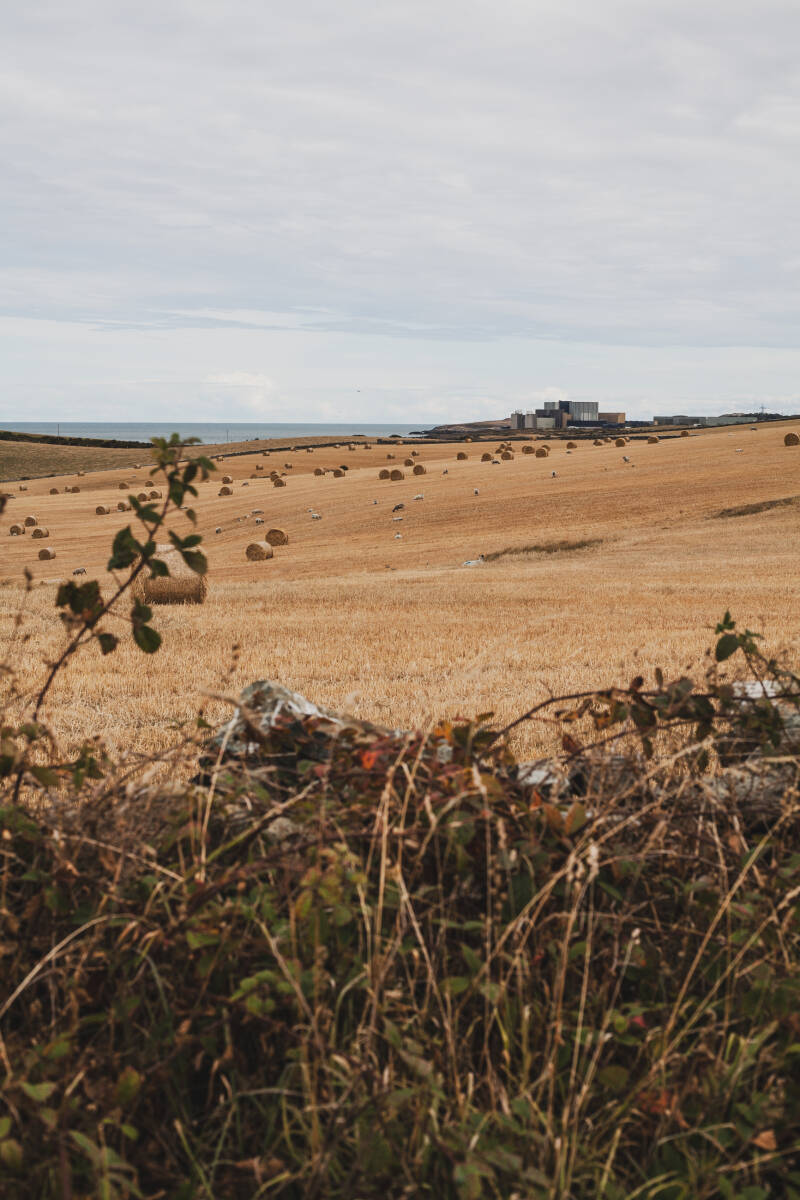
Near Cemaes, Anglesey, 2026. Wylfa began generating electricity in 1971 and ceased generation in 2015.
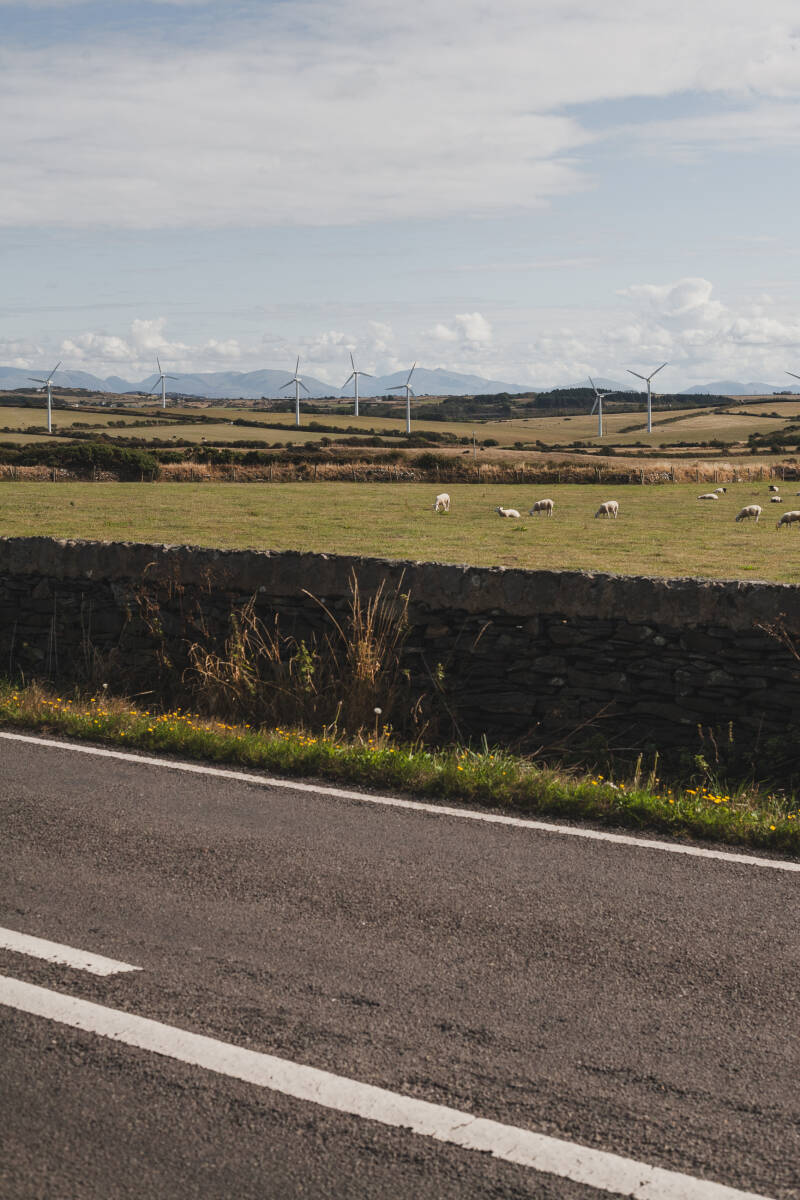
New energy infrastructure — On the opposite side of Cemaes from Wylfa, Anglesey, 2026. The wind turbines sit across the landscape from the former nuclear power station, creating a visual contrast between old and new energy infrastructure.
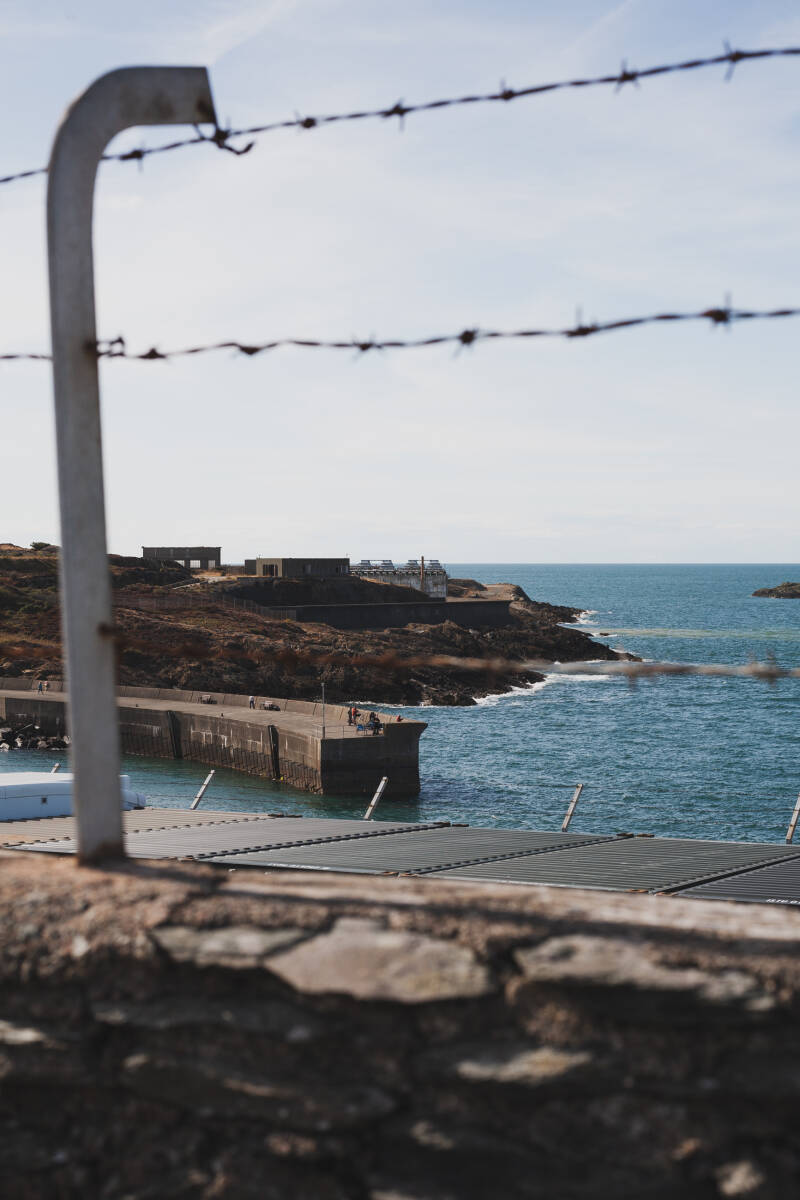
Former OCTEL Bromine Works — Amlwch, Anglesey, 2026. The works closed in 2004 after more than 50 years of operation.
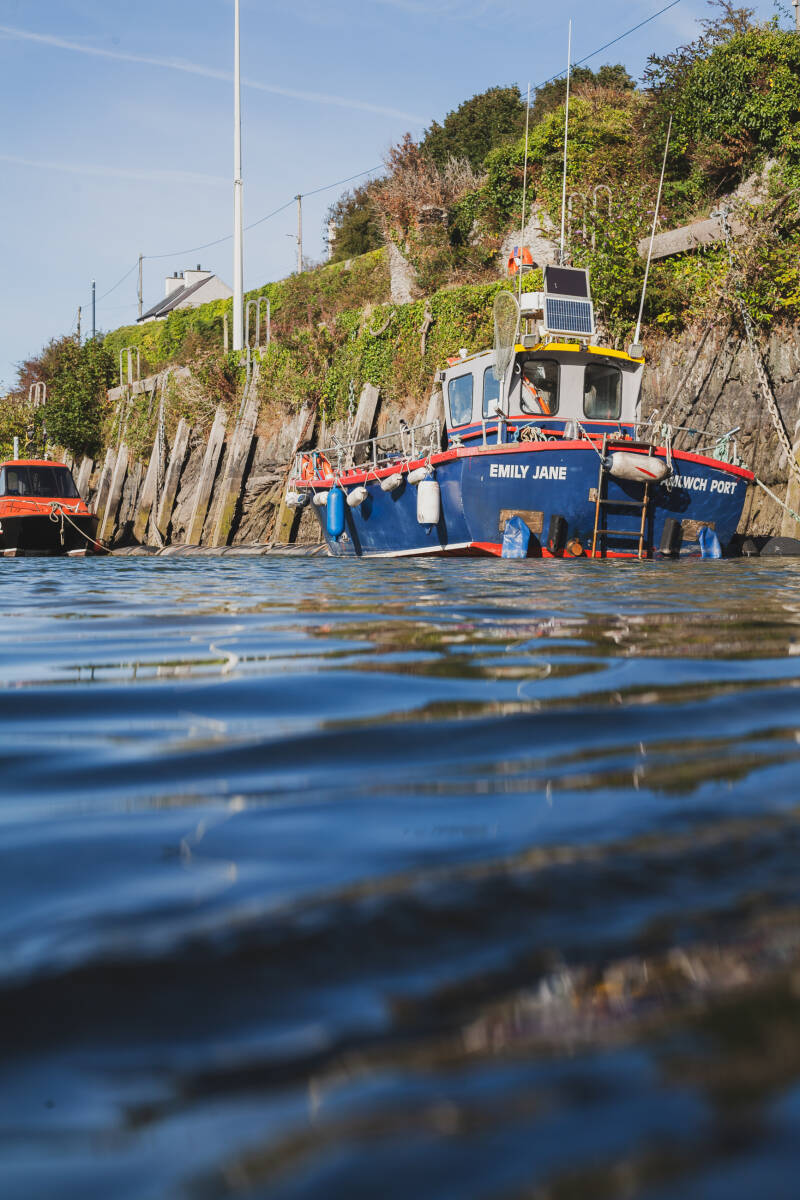
Emily Jane fishing boat — Amlwch Harbour, Anglesey, 2026.
On the other side of Cemaes, wind turbines stand across the landscape from the old power station. The two forms of energy sit within sight of each other: one no longer generating electricity, the other part of a newer energy landscape.
Further on, at Amlwch, the remains of the former Octel Bromine works tell another part of the story.
The plant began producing Bromine from seawater in 1953. The works eventually employed around 120 people and produced bromine-derived chemicals for more than 50 years before production stopped in March 2004. The site was part of a much longer industrial history in Amlwch, a town whose harbour had originally grown around the copper industry.
The Octel works closed, but the landscape remains.
At Amlwch harbour, I found an old fishing boat and signs of another side of the town's relationship with the sea. The harbour that once served the copper industry is now used largely by leisure boats, while fishing still continues on a smaller scale.
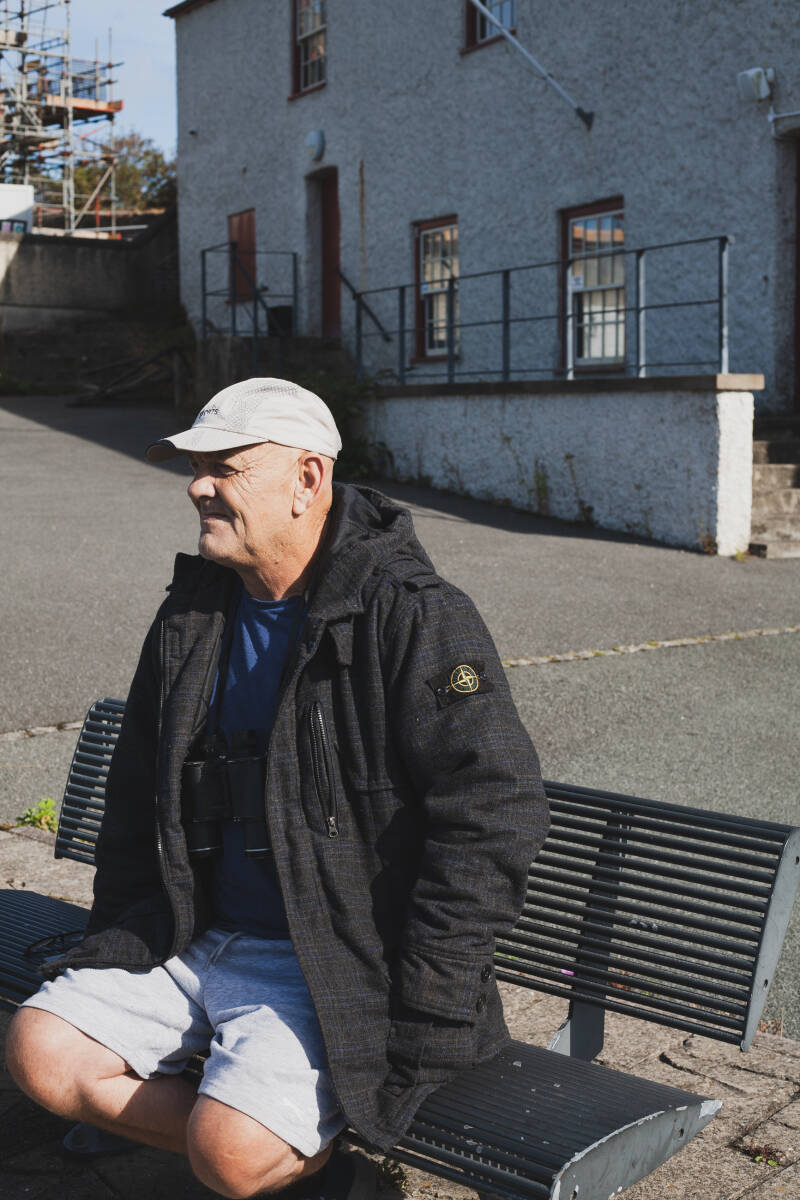
Neil — Amlwch, Anglesey, 2026. Neil works locally and spends time living in a camper van. “It’s quiet here in the week, but from Friday lunchtime the campervans arrive.”
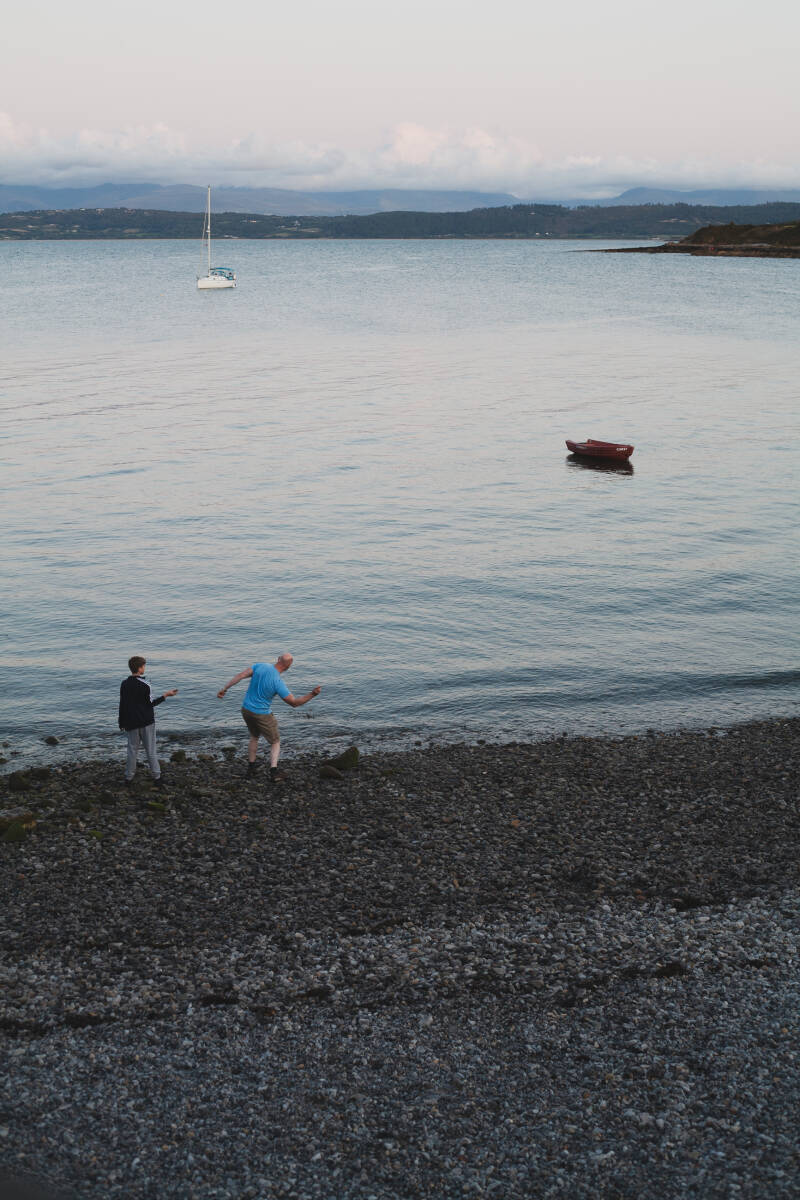
A father teaches his son to skim stones — Moelfre, Anglesey, 2026.
I met Neil there. He works locally as a plasterer, fishes in his spare time and spends much of the year living in his camper van on the island. He has a house in Manchester but chooses to spend much of his time in Anglesey.
“It’s quiet here in the week,” he told me, “but from Friday lunchtime the campervans arrive.”
That sentence stayed with me because it seemed to describe another change taking place across the island. People come to Anglesey for the coast, while people who live and work there are trying to make a life around what remains.
By the time I reached Moelfre, I had stopped looking for a single story about Anglesey. A father teaching his son to skim stones was a reminder that, alongside the industries, tourists and questions about employment, ordinary life continued.
It was just a father and son on the beach, making the most of an early evening together.
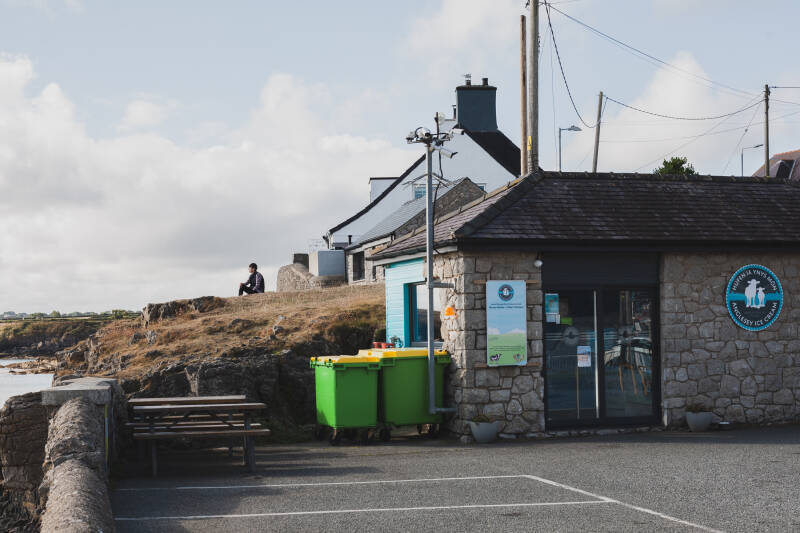
Moelfre — Anglesey, 2026.
Over three days, I travelled from Holyhead through Cemaes and Amlwch to Moelfre. I found an island where the remains of heavy industry sit alongside tourism, new businesses, fishing, local communities and new energy infrastructure.
The industries that once provided large numbers of jobs have gone or changed. What comes next is less certain.
The project does not try to settle those questions. It records one journey through Anglesey and the people I met along the way.
I left still thinking about what Nigel had said: “It’s a nice place if you have a job.”
Thank you for visiting the website and reading this article. Please like and share to show your support.
You can see more work by the photographer here: Jose Baker.